
AdAdvertise with us·Reach an audience of professional tech enthusiasts
Favicon of Airtable website

Open Source Airtable Alternatives

A curated collection of the 4 best open source alternatives to Airtable.

4 open source alternatives · Updated

The best open source alternative to Airtable is Baserow. If that doesn't suit you, we've compiled a ranked list of other open source Airtable alternatives to help you find a suitable replacement. Other interesting open source alternatives to Airtable are: Grist, NocoDB and Teable.

Airtable alternatives are mainly Database Management but may also be No-Code. Browse these if you want a narrower list of alternatives or looking for a specific functionality of Airtable.

Open Source Airtable alternatives compared

#ToolPricingOpen source
1 BaserowFree + From $10/moYes
2 GristFree + From $10/moYes
3 NocoDBFree + From $12/moYes
4 TeableFree + From $13/moYes

The best open source Airtable alternatives, ranked

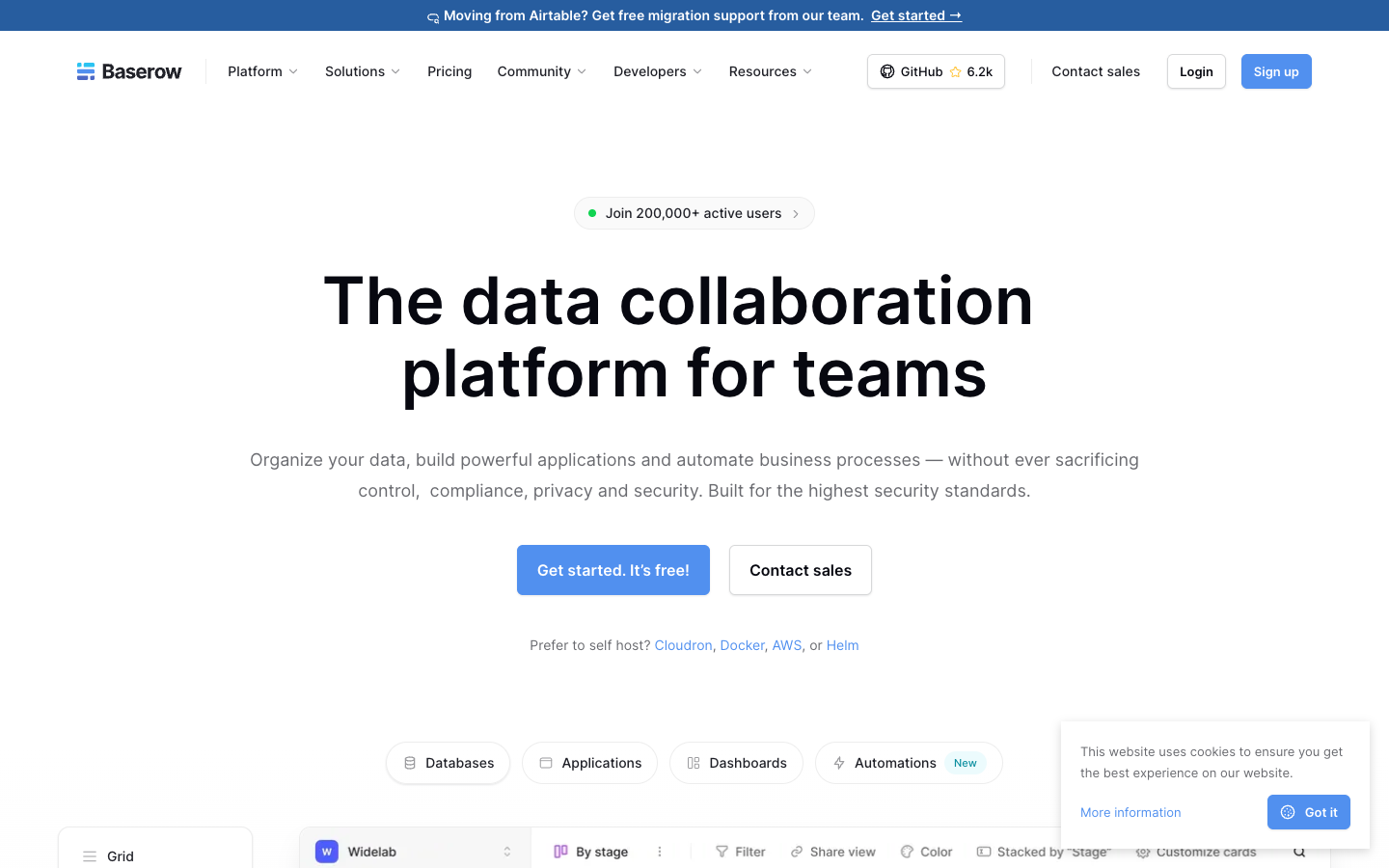
Baserow is an MIT-licensed no-code platform for building databases, applications, dashboards and automations. Use the hosted cloud version or self-host it with Docker, Helm, Cloudron or AWS.
Free + From $10/mo
Open-source
Self-hosted
Screenshot of Baserow website

Baserow is an open-source (MIT license) no-code platform for teams that want to organize data in spreadsheet-like databases, build internal applications and automate workflows without writing code. It runs as a hosted cloud service or can be self-hosted with Docker, Helm, Cloudron or AWS, which makes it a fit for organizations that care about data control and compliance.

Key benefits of Baserow include:

  • Multiple views: Data can be shown as grid, gallery, form, kanban, calendar, timeline or survey views, though some views require a paid cloud plan.
  • Application builder: Compose pages, dashboards and portals on top of your data, with up to 500 external app users on every cloud plan.
  • Automations: Build workflows with triggers, branches, conditions and loops, using native HTTP, email and webhook actions plus third-party connectors.
  • API-first and extensible: Every feature is exposed through the API, and both frontend and backend plugins are supported.
  • Compliance options: Baserow states GDPR, HIPAA and SOC 2 compliance, and self-hosting keeps data on your own infrastructure.

For teams leaving Airtable, Baserow offers a familiar table-based workflow, an Airtable import tool and free migration support. The main draw is self-hosting, which removes the row limits Baserow says apply on hosted plans. The trade-offs are real, though: the free cloud plan is limited to 3,000 rows and 2GB per workspace, kanban and calendar views need the Premium plan, and advanced features like role-based permissions, audit logs and SSO sit in higher paid tiers. Self-hosting also means you run and maintain the server yourself.
Read the Baserow review

Grist combines a spreadsheet interface with a relational database, letting teams organize data across linked tables. It offers a free hosted plan and a free, open-source Community edition you can run on your own server.

Free + From $10/mo
Open-source
Self-hosted
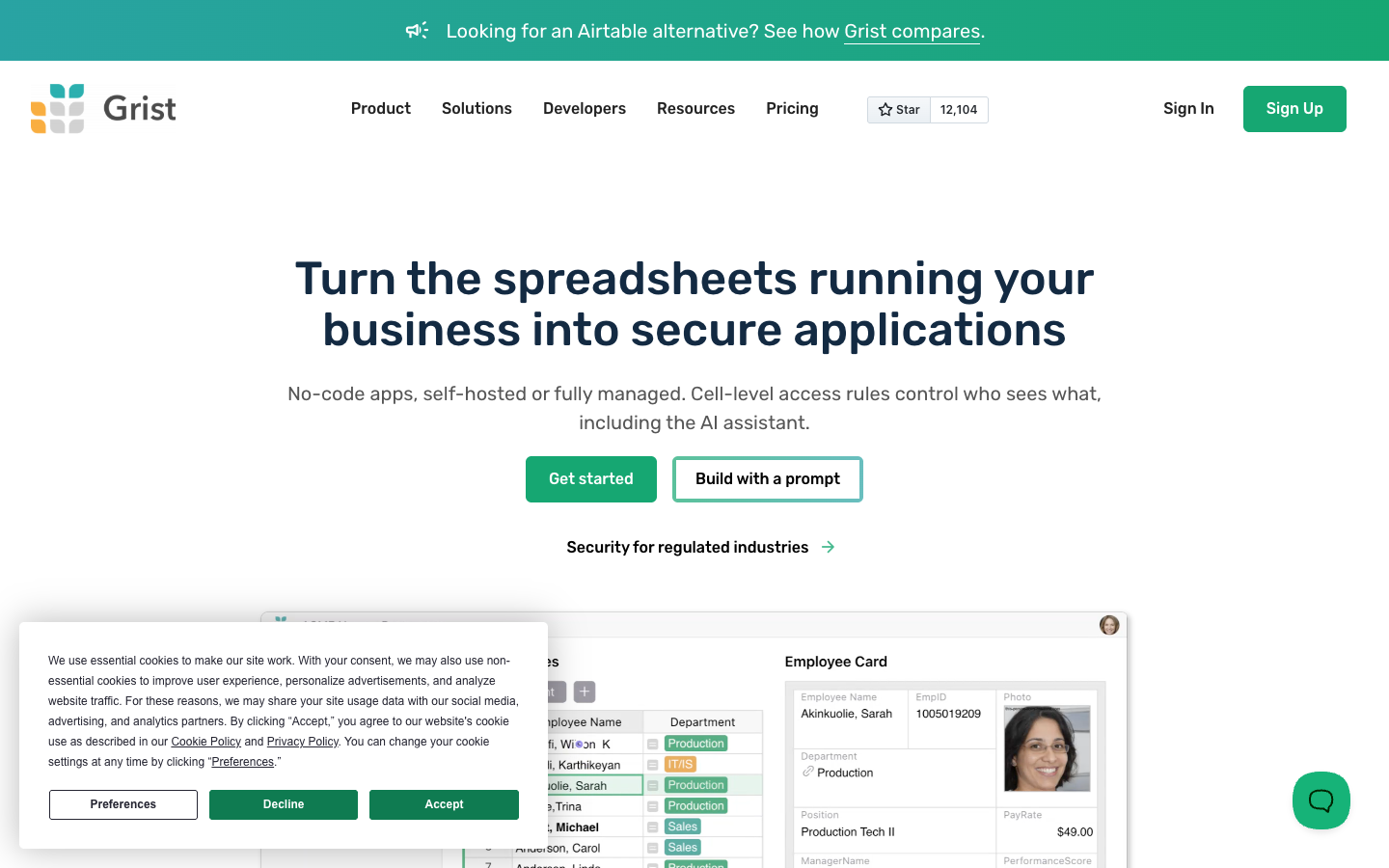
Screenshot of Grist website

Grist is a relational spreadsheet-database: each document holds multiple linked tables, so you can model data the way you would in a database while working in a familiar spreadsheet grid. It suits individuals, small teams and organizations such as nonprofits, research labs and project teams that have outgrown plain spreadsheets.

Key benefits of Grist include:

  • Open-source core: The Grist Community edition is free and can be hosted on your own server, with the code on GitHub.
  • Generous free hosted plan: The Free plan includes unlimited documents, up to 5,000 records per document and 30 days of snapshot history.
  • Easy self-hosting: Ready-made installs exist for AWS, Azure, Unraid, Yunohost, Cloudron and Proxmox.
  • Developer features: An API, webhooks, custom widgets and an interactive API console let you integrate Grist with other tools.
  • Forms and automations: Built-in forms collect data, and automations are available on the Business plan.

For someone leaving Airtable, Grist's main draw is control: you can self-host the open-source edition and avoid data lock-in, and individuals or organizations with under $1 million in annual income can request a free activation key for extra self-hosted features. Paid cloud plans start at $10 per user per month ($8 billed annually). Trade-offs: record limits per document apply on hosted plans (5,000 on Free, 100,000 on Pro), some features like automations, custom SSO and audit logs require paid tiers, and the Community edition comes with community support only.

Read the Grist review

NocoDB gives databases a spreadsheet interface with grid, kanban, gallery, form, calendar and map views. Use the hosted cloud or self-host the free fair-code Community edition with unlimited records and seats.

Free + From $12/mo
Open-source
Self-hosted
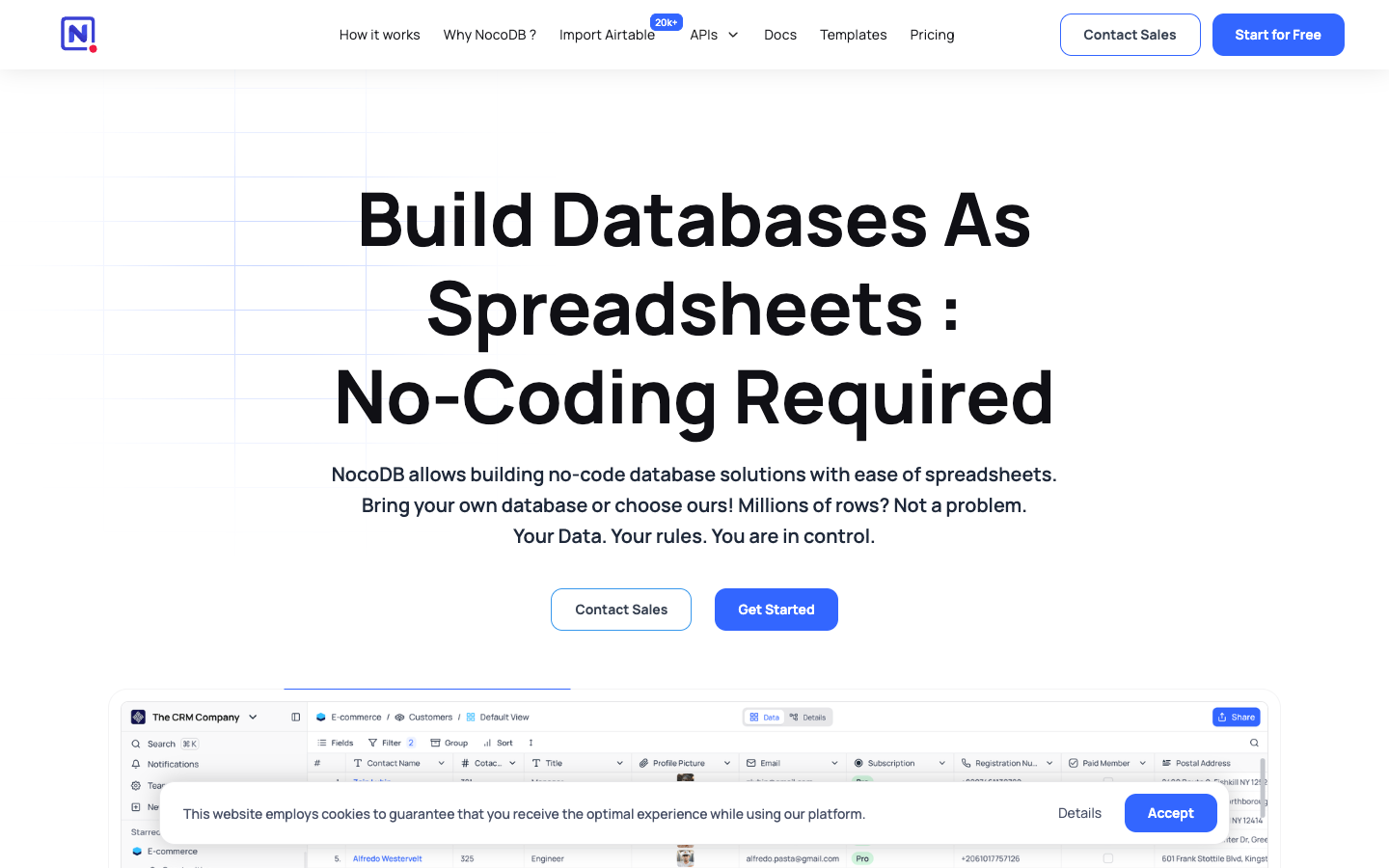
Screenshot of NocoDB website

NocoDB is a no-code database platform that puts a spreadsheet interface on top of your data. You can build databases from scratch or connect an existing Postgres or MySQL database, then work with records through views or via APIs and SQL. It suits teams building CRMs, project trackers, inventory systems and other internal tools who want to keep control of their data.

Key benefits of NocoDB include:

  • Free self-hosting: The Community edition is free, fair-code and self-deployed, with unlimited records, storage and seats.
  • Bring your own database: Connect external Postgres or MySQL databases, or use NocoDB's hosted database.
  • Multiple views: Grid, Kanban, Gallery, Form, Calendar and Map views are included on the free self-hosted edition.
  • APIs and webhooks: REST APIs and webhooks let you automate workflows and integrate with other tools.
  • Airtable import: Bring in existing bases from Airtable, as well as CSV and Excel files.

For someone leaving Airtable, the main draw is ownership: self-hosting removes record caps and per-seat fees, and you can point NocoDB at a database you already run. The trade-off is that self-hosting means handling deployment, updates and backups yourself. The cloud free tier is limited (3 editors, 1,000 records), and external database connections on cloud require the Business plan. NocoDB is described as fair-code/fair source rather than a classic OSI open-source license, which is worth checking if licensing matters to you.

Read the NocoDB review

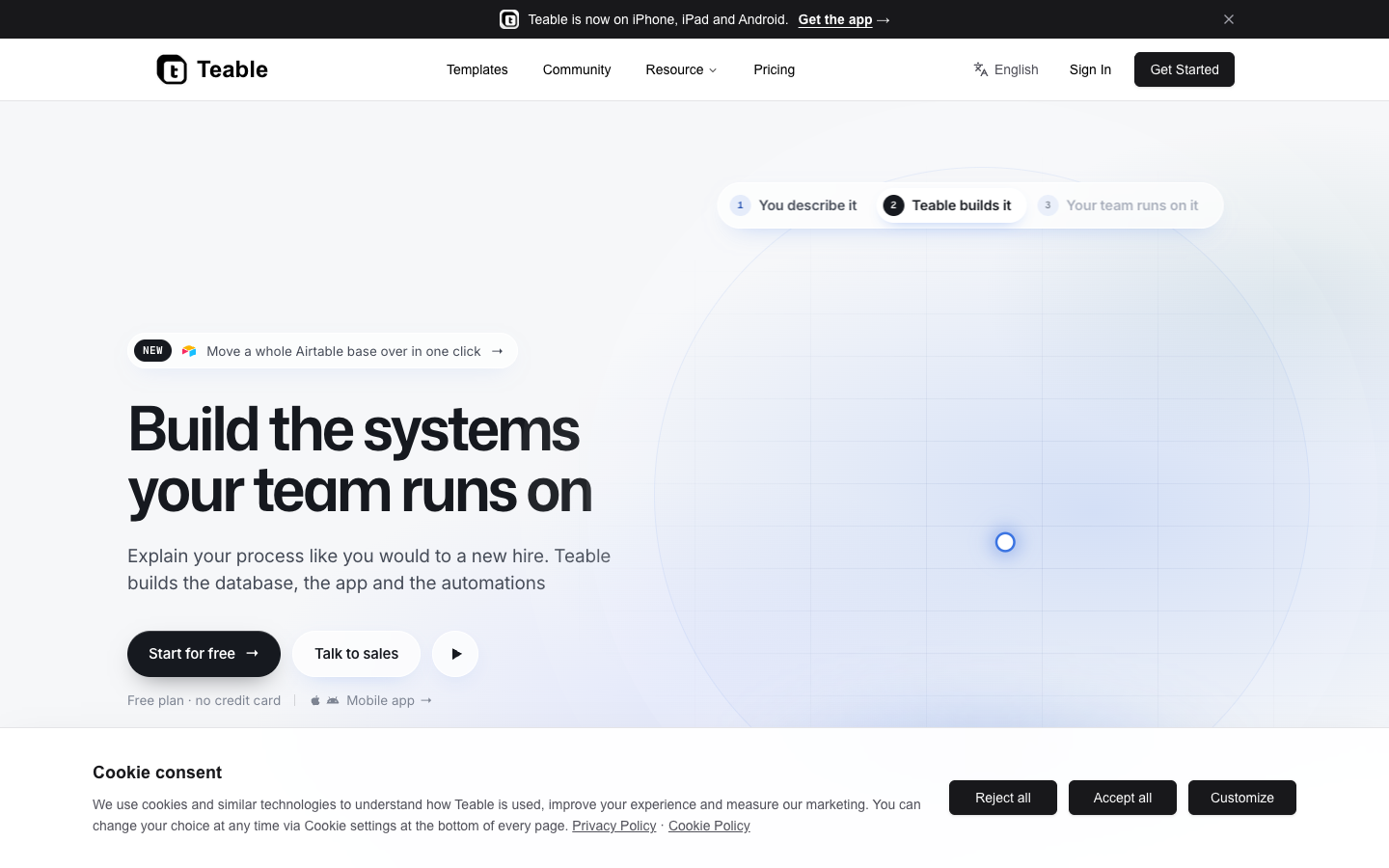
Teable is an open-source Airtable alternative that combines a spreadsheet-style database, an app builder and automations. Use the hosted cloud with a free plan or self-host it with Docker.

Free + From $13/mo
Open-source
Self-hosted
Screenshot of Teable website

Teable is a no-code database platform for teams that want to turn spreadsheets and scattered handoffs into working systems. It keeps a familiar grid and adds forms, automations, AI features and an app builder for internal tools, portals and dashboards. You can describe a process in plain language and have Teable set up the tables, app and automations, or build them yourself. It runs as a hosted service or can be self-hosted from its open-source code.

Key benefits of Teable include:

  • Self-hosting and open code: The source is on GitHub, it starts with docker compose up, and you can export your data.
  • Airtable import: A whole Airtable base can be moved over in one click.
  • Familiar views and fields: Grid, form, kanban, gallery and calendar views, plus formulas, linked records, rollups and lookups.
  • Automations and AI: Approval flows, scheduled reports, email and Slack steps, AI fields and an AI chat that answers questions against live data.
  • Permissions and sharing: Field-level permissions, Google or email-code sign-in, SSO on the Business plan and row change history.

For someone leaving Airtable, Teable offers a similar data model with a direct import path and the option to run it on your own infrastructure. The cloud Free plan is limited to 1,000 rows, 100 automation runs per month and 1GB of attachments per space, so growing teams will likely need Pro ($13 per seat/month billed yearly) or self-hosting. Some features, like SSO and custom app domains, sit on the Business tier, and AI features consume usage credits. It also connects to 1,600+ tools and works with external AI agents.

Read the Teable review

Share:

Discover the best open source alternatives to

View all

Put your SaaS product in front of active buyers

Reach developers, tech leaders and founders looking for open source tools to adopt.

Submit your product