



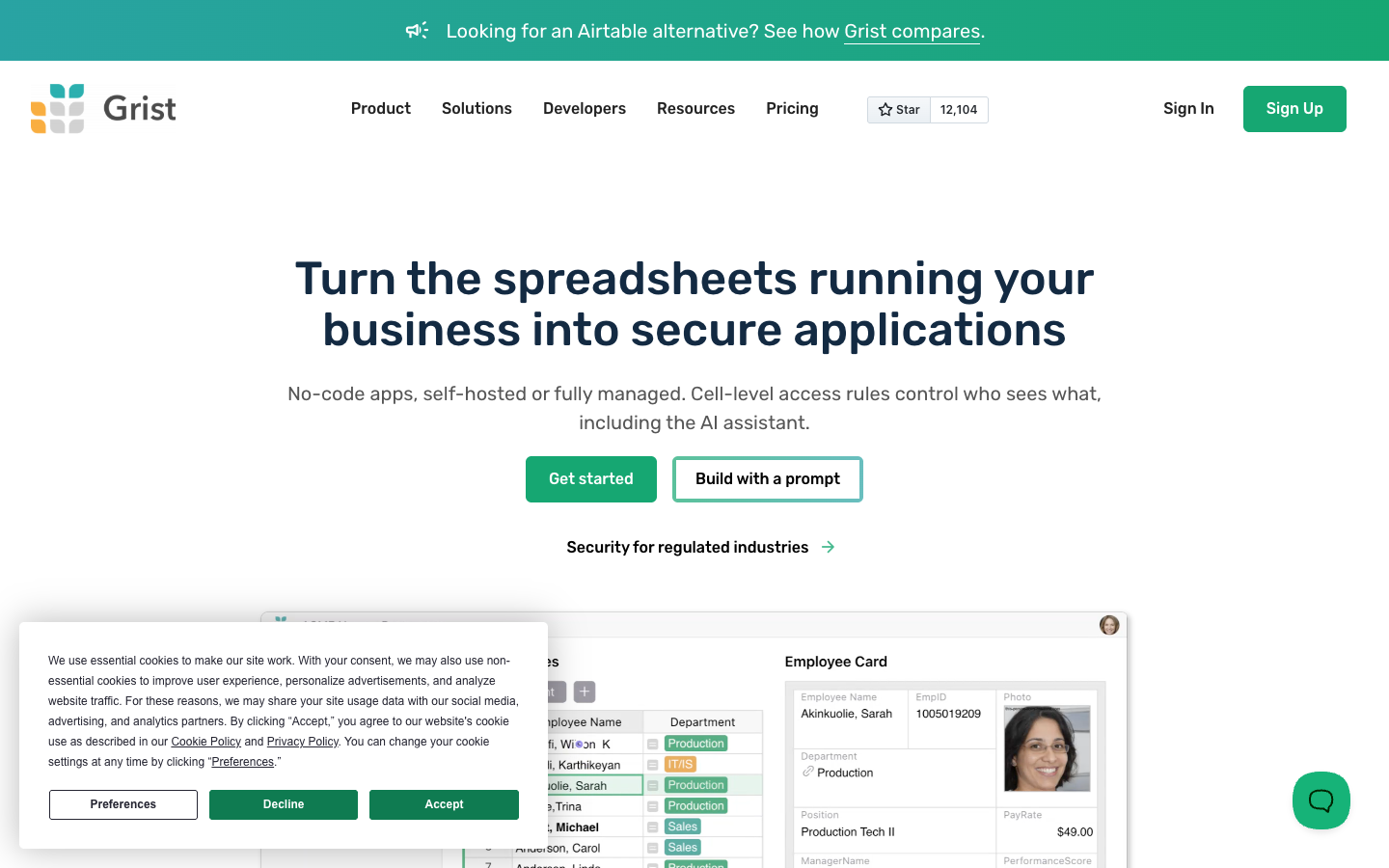
About Grist
Grist is a relational spreadsheet-database: each document holds multiple linked tables, so you can model data the way you would in a database while working in a familiar spreadsheet grid. It suits individuals, small teams and organizations such as nonprofits, research labs and project teams that have outgrown plain spreadsheets.
Key benefits of Grist include:
- Open-source core: The Grist Community edition is free and can be hosted on your own server, with the code on GitHub.
- Generous free hosted plan: The Free plan includes unlimited documents, up to 5,000 records per document and 30 days of snapshot history.
- Easy self-hosting: Ready-made installs exist for AWS, Azure, Unraid, Yunohost, Cloudron and Proxmox.
- Developer features: An API, webhooks, custom widgets and an interactive API console let you integrate Grist with other tools.
- Forms and automations: Built-in forms collect data, and automations are available on the Business plan.
For someone leaving Airtable, Grist's main draw is control: you can self-host the open-source edition and avoid data lock-in, and individuals or organizations with under $1 million in annual income can request a free activation key for extra self-hosted features. Paid cloud plans start at $10 per user per month ($8 billed annually). Trade-offs: record limits per document apply on hosted plans (5,000 on Free, 100,000 on Pro), some features like automations, custom SSO and audit logs require paid tiers, and the Community edition comes with community support only.