
AdAdvertise with us·Reach an audience of professional tech enthusiasts
Favicon of Microsoft Copilot website

Best Popular Microsoft Copilot Alternatives

A curated collection of the 6 best alternatives to Microsoft Copilot.

6 alternatives · Updated

The best alternative to Microsoft Copilot is Duck.ai. If that doesn't suit you, we've compiled a ranked list of other Microsoft Copilot alternatives to help you find a suitable replacement. Other interesting alternatives to Microsoft Copilot are: Jan, Le Chat, LibreChat and Open WebUI.

Microsoft Copilot alternatives are mainly Artificial Intelligence but may also be Desktop Apps. Browse these if you want a narrower list of alternatives or looking for a specific functionality of Microsoft Copilot.

Microsoft Copilot alternatives compared

#ToolPricingOpen source
1 Duck.aiFreeNo
2 JanFreeYes
3 Le ChatFree + From $14.99/moNo
4 LibreChatFreeYes
5 Open WebUIFreeYes
6 Zoom AI CompanionFrom $15.99/moNo

The best Microsoft Copilot alternatives, ranked

Duck.ai is DuckDuckGo's private AI chat service that lets you use ChatGPT, Claude and other AI models without creating an account. It is free and built to keep your conversations confidential.
Free
Screenshot of Duck.ai website

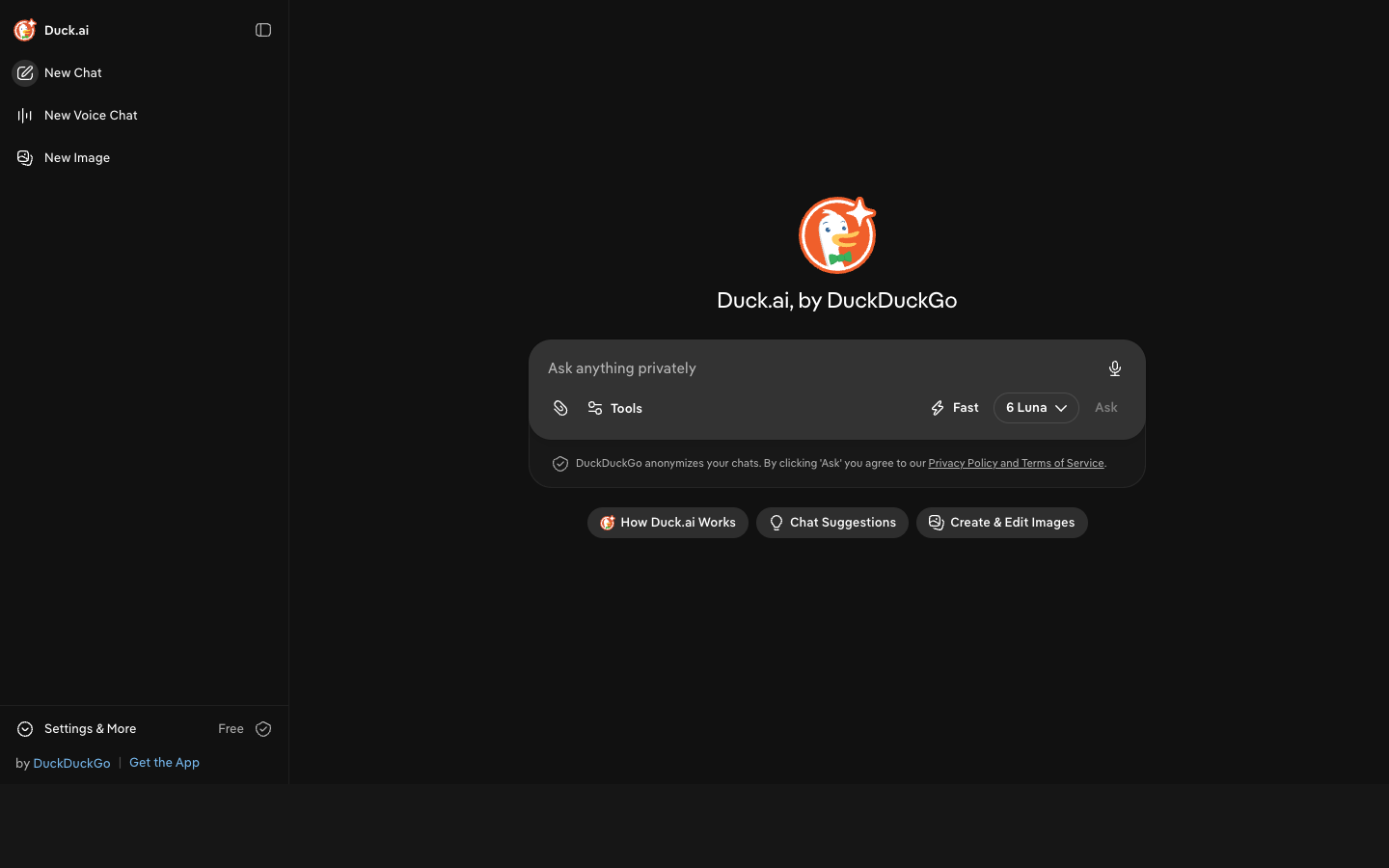
Duck.ai is an AI chat service from DuckDuckGo that gives you access to several AI models, including ChatGPT and Claude, through a single private interface. It is aimed at people who want to use AI chatbots for everyday questions and writing but don't want their conversations tied to an account or exposed to companies, hackers or scammers.

Key benefits of Duck.ai include:

  • No account required: You can start chatting right away without signing up or handing over an email address.
  • Multiple AI models: You can use ChatGPT, Claude and other AIs from one place instead of juggling separate services.
  • Privacy focus: The service is designed to protect your chats and keep the information you share confidential.
  • Free to use: DuckDuckGo describes Duck.ai as free.
  • From an established privacy brand: It is built by DuckDuckGo, known for its private search engine.

If you are leaving ChatGPT or Microsoft Copilot mainly because of privacy concerns or account requirements, Duck.ai is a simple swap: you keep access to familiar models like ChatGPT without logging in. The trade-offs are that it is not open source, so you are trusting DuckDuckGo's privacy claims rather than verifying them, and the pages provided don't describe usage limits, file uploads, or other advanced features that paid ChatGPT or Copilot plans offer. Treat it as a private, lightweight chat front end rather than a full replacement for every premium feature.
Read the Duck.ai review
#2
Favicon of Jan website

Jan

Jan is an open-source alternative to ChatGPT that lets you run open AI models such as Llama, Mistral, Qwen and DeepSeek locally, or plug in cloud models like GPT, Claude and Gemini.

Free
Open-source
Screenshot of Jan website

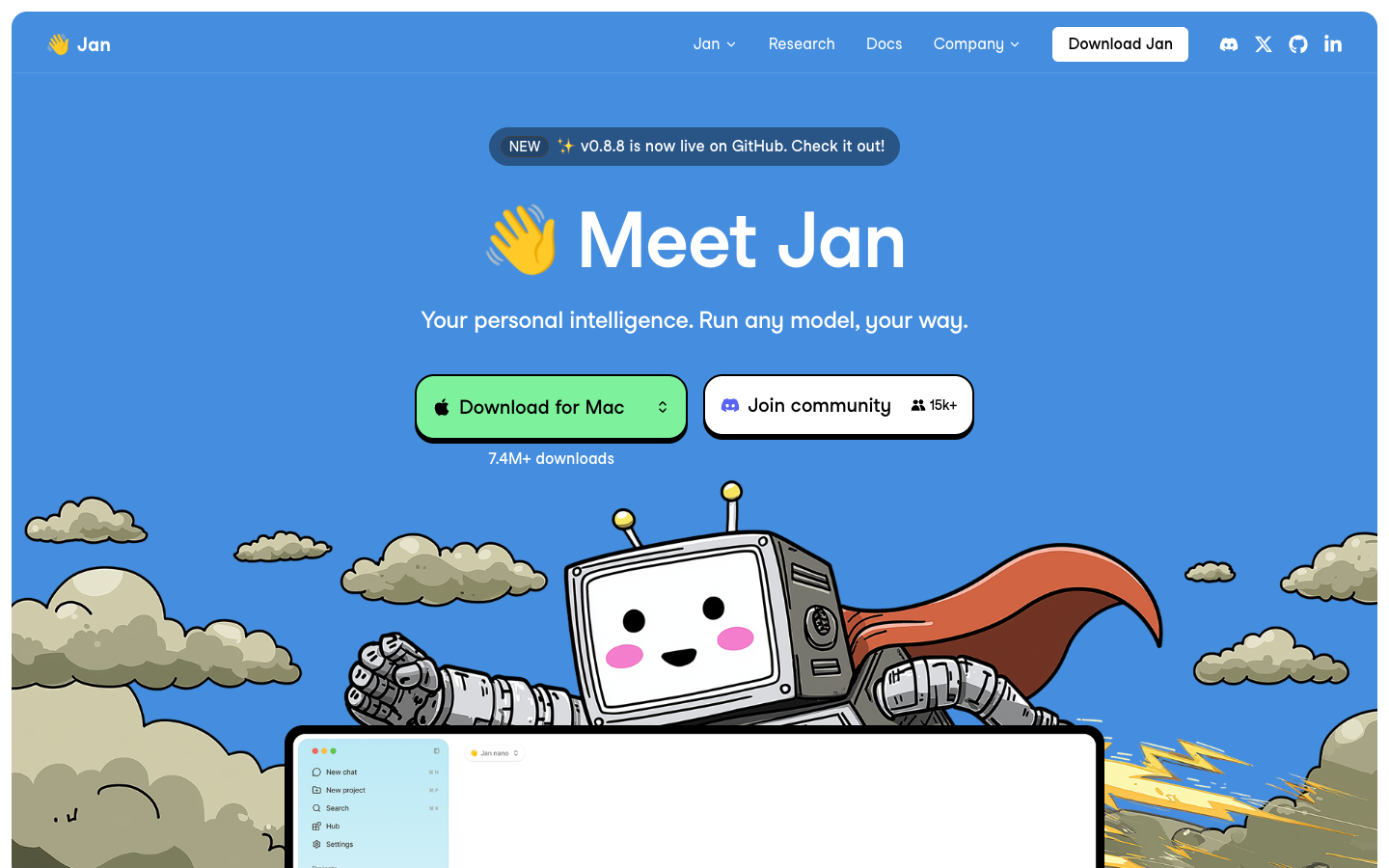
Jan is a free, open-source desktop app for chatting with AI models. It is built by Menlo Research for people who want a ChatGPT-style assistant they control: you can run open models on your own machine or connect to online models from providers you already use. The project is developed in public on GitHub, where it has over 45,000 stars.

Key benefits of Jan include:

  • Local models: Run open models such as Llama, Mistral, Qwen, DeepSeek, Gemma and Kimi on your own computer.
  • Cloud model support: Plug in online models including OpenAI's ChatGPT, Anthropic's Claude and Google's Gemini from the same app.
  • Open source: The code is public on GitHub, so you can inspect it, contribute or build on it.
  • Free to download: The desktop app is free, with more than 7 million downloads reported.
  • Active community: Discord, GitHub and a HuggingFace presence with 123 published models.

If you are leaving ChatGPT, Gemini or Copilot, Jan gives you one interface that can run models offline on your own hardware, which keeps conversations on your machine, while still letting you reach hosted models when you need them. The trade-offs: local models depend on your computer's resources and may be slower or less capable than the largest hosted models, and using cloud models still means sending data to, and paying, those providers. Some features, like persistent memory across chats, are listed as coming soon rather than available today.

Read the Jan review

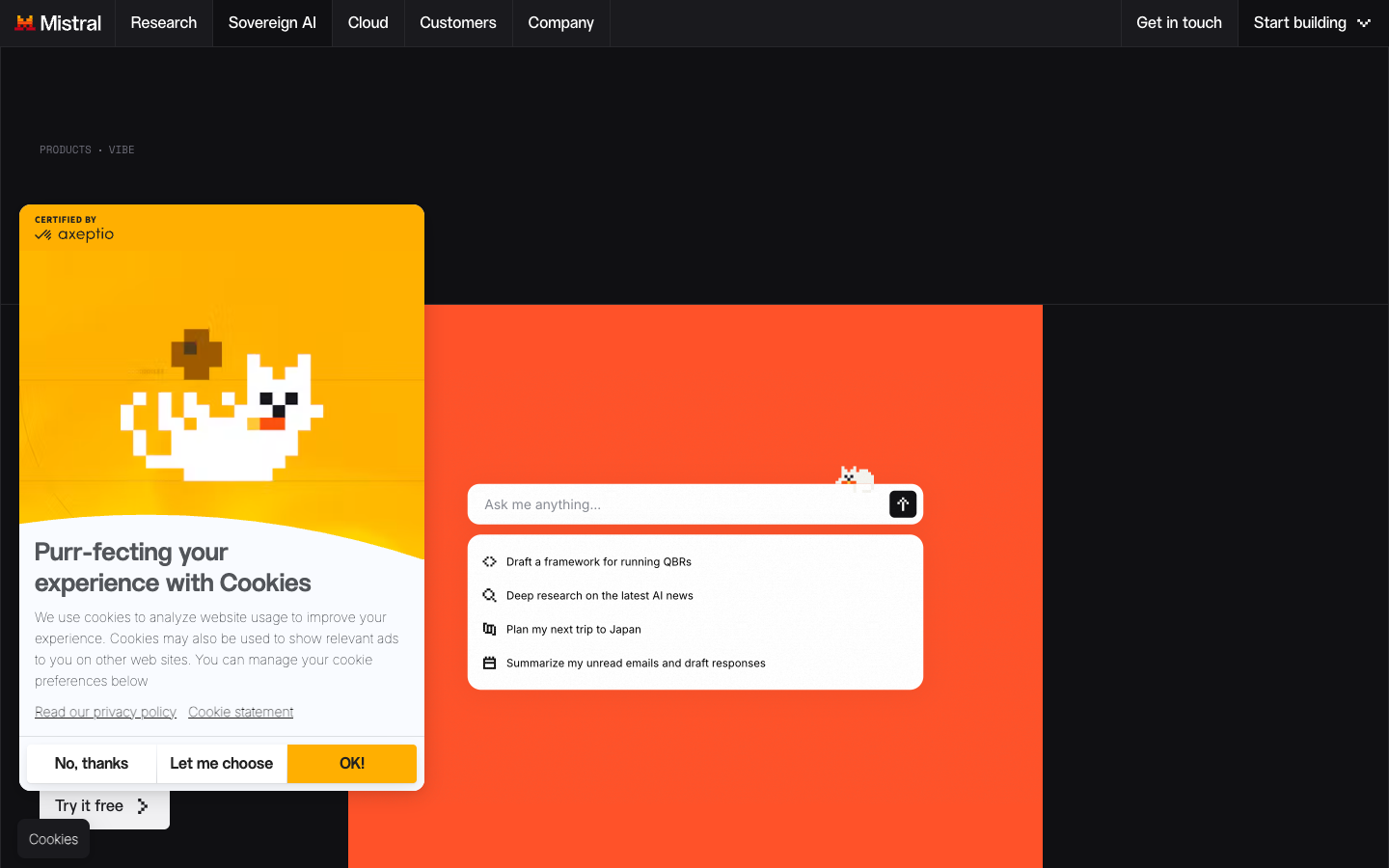
Le Chat, now renamed Vibe, is Mistral AI's chat assistant and coding agent. It handles web search, document work, voice input and coding via CLI or IDE, with a free plan and paid tiers from $14.99/month.

Free + From $14.99/mo
Screenshot of Le Chat website

Le Chat is Mistral AI's AI chat assistant, now rebranded as Vibe. Existing conversations, settings and plans carry over. Vibe combines a general chat assistant for work with a coding agent, and it is aimed at individuals, developers, teams and enterprises. It runs on the web, on iOS and Android, in a terminal CLI, and in VS Code, JetBrains and Zed.

Key benefits of Le Chat include:

  • Free plan: Quick answers, limited web searches, basic image generation, limited coding sessions and 100+ connectors at no cost.
  • Coding agent: A CLI and IDE plugin powered by Devstral, with remote coding agents in isolated sandboxes on paid plans.
  • Tool connections: Connectors for email, calendar, Slack, GitHub and Jira, plus support for custom remote MCP servers.
  • Documents and voice: Upload PDFs, spreadsheets and Office files into libraries. Voice input is powered by Voxtral.
  • Self-hosting for enterprises: Enterprise customers can deploy on-premises, in a private cloud or on Mistral Cloud with full data residency.

If you are leaving ChatGPT, Gemini or Copilot, Vibe gives you a comparable chat, search and coding experience from a European provider, with a usable free tier. Pro starts at $14.99/month, and Team costs $24.99 per user per month. The trade-offs are that Vibe is not open source, and the free plan has message, search and coding limits. Agents and long-horizon tasks require Pro. Private deployment and fine-tuning are only available on Enterprise.

Read the Le Chat review

LibreChat is an open-source AI chat platform you can self-host. It connects OpenAI, Anthropic, Google, Ollama and many other providers in one interface, with agents, artifacts, MCP tools, memory and enterprise SSO.

Free
Open-source
Self-hosted
Screenshot of LibreChat website

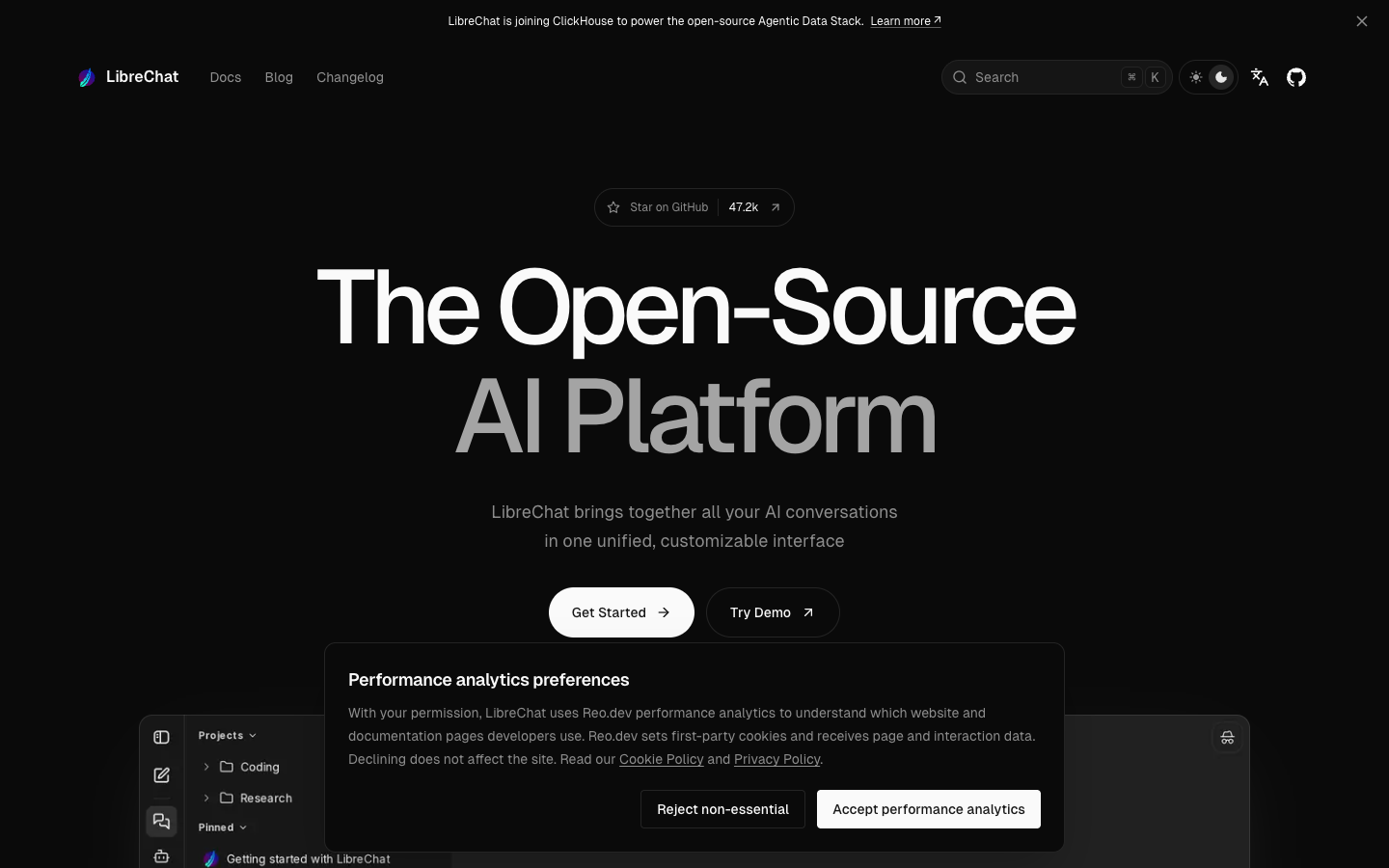
LibreChat is an open-source AI platform that brings conversations with many AI providers and local models into one customizable interface. It suits individuals, developers and organizations who want a ChatGPT-style workspace they can run on their own infrastructure, with a large community behind it (47.2k GitHub stars and 425 contributors at the time of writing).

Key benefits of LibreChat include:

  • Many models in one place: Connect OpenAI, Anthropic, Google, Azure OpenAI, AWS Bedrock, Mistral, DeepSeek, OpenRouter, Ollama, vLLM and more from a single workspace.
  • Agents and tools: Build agents with your files, reusable skills and subagents, and connect external services through Model Context Protocol (MCP).
  • Artifacts and code execution: Turn conversations into interactive apps, diagrams and documents, and run code in an isolated interpreter.
  • Memory and search: Keep persistent context across chats, organize work into projects, search past messages and give models live web search.
  • Enterprise authentication: Supports SSO with OAuth, SAML and LDAP, plus two-factor authentication.

If you are leaving ChatGPT, Gemini or Copilot, LibreChat lets you keep a familiar chat experience while choosing which models to use, including local ones, and keeping conversation data on your own servers. The trade-off is that you have to install and maintain it yourself (Docker-based local and remote install guides are available), and you still need API keys or a local model runtime, which carry their own costs or hardware requirements.

Read the LibreChat review

Open WebUI is an open-source, self-hosted interface for running AI chat on your own hardware. It connects to Ollama, OpenAI, Anthropic or any compatible API, and can be extended with Python tools and functions.

Free
Open-source
Self-hosted
Screenshot of Open WebUI website

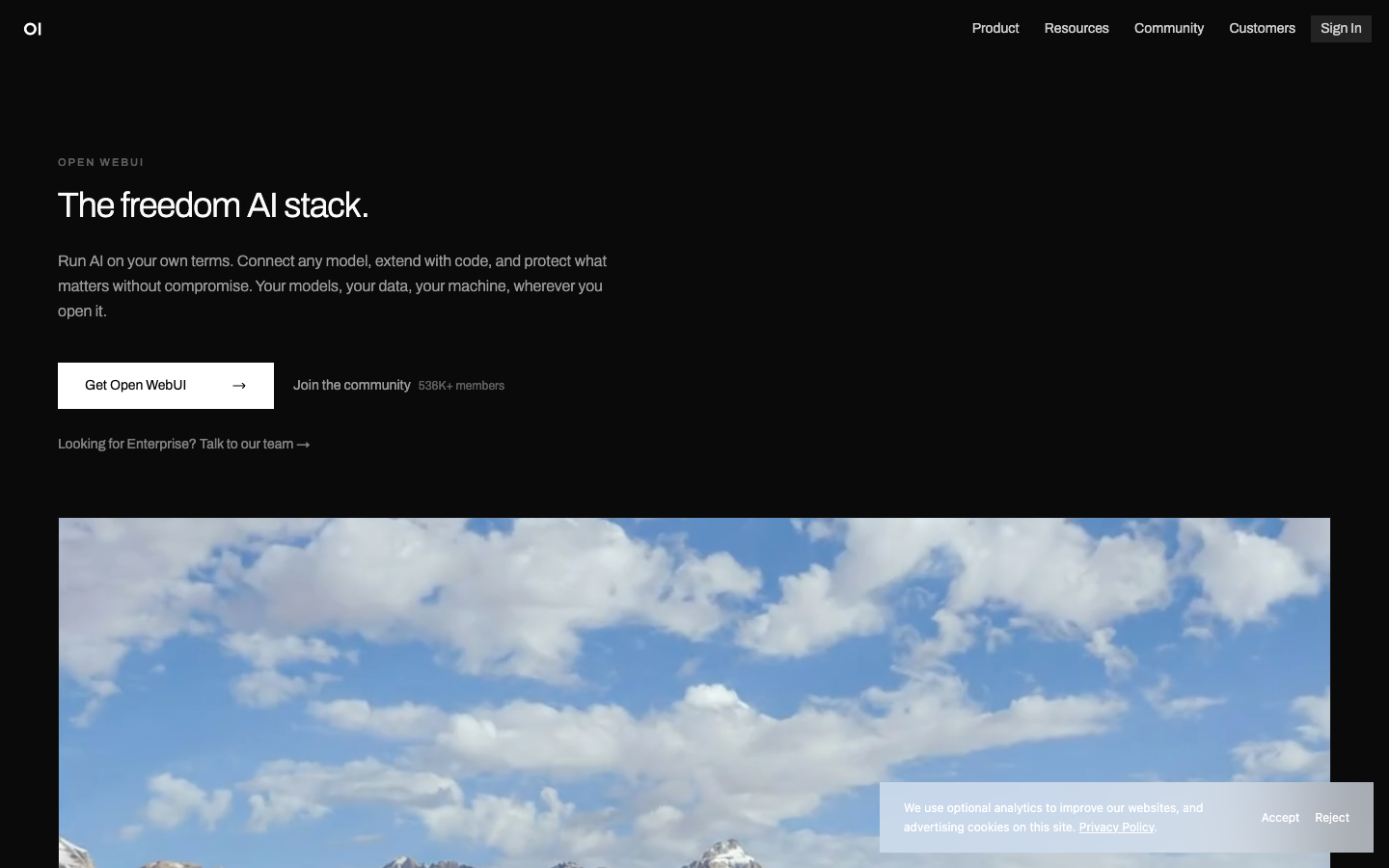
Open WebUI is an open-source, self-hosted AI platform that gives you a chat workspace on your own machine, server or cloud. It is aimed at individuals who want to run local models and at organizations that need to keep AI usage and data under their own control, including on-premises or air-gapped setups.

Key benefits of Open WebUI include:

  • Any model: Connect to Ollama, OpenAI, Anthropic or any compatible API, running locally, in the cloud, or both.
  • Quick install: Install with pip install open-webui or Docker, with no account required.
  • Extensible with Python: Add tools, functions and pipelines for RAG, search and code execution.
  • Community library: Browse and install prompts, models, tools and functions shared by community members.
  • Organization features: SSO, RBAC, audit logs and data residency options are available for teams in regulated industries.

For someone moving away from ChatGPT, Gemini or Copilot, Open WebUI offers a familiar chat interface where conversations and data stay on infrastructure you choose, and you are not tied to a single model vendor. The trade-off is that you run it yourself: you need to install and maintain it, and either provide hardware capable of running local models or bring your own API keys (and pay those providers) for cloud models. Response quality depends on which model you connect, not on Open WebUI itself.

Read the Open WebUI review

Enhances productivity by automating tasks such as summarizing meetings, generating follow-up notes, and suggesting actions.

From $15.99/mo
Screenshot of Zoom AI Companion website

Zoom's AI Assistant streamlines collaboration by offering real-time transcription, action items, and meeting summaries. Designed for professionals aiming to boost productivity, it integrates seamlessly with Zoom's ecosystem to enhance workflows and reduce repetitive tasks.

Key benefits of Zoom AI Companion include:

  • Real-time Transcriptions: Automatically transcribes meetings for easy reference and accessibility.
  • Actionable Insights: Generates action items and highlights key points for follow-up.
  • Seamless Integration: Works natively with Zoom Meetings, Chat, and other tools.
  • Time-saving Summaries: Provides concise meeting recaps to improve team efficiency.
  • Intuitive AI Features: Easy-to-use, ensuring smooth adoption and workflow enhancement.
Read the Zoom AI Companion review

Frequently asked questions

What is the best alternative to Microsoft Copilot?

The top-rated alternative to Microsoft Copilot is Duck.ai. Duck.ai is DuckDuckGo's private AI chat service that lets you use ChatGPT, Claude and other AI models without creating an account. It is free and built to keep your conversations confidential. Other popular options include Jan, Le Chat, LibreChat. Compare features and pricing in the table above.

How many alternatives to Microsoft Copilot are there?

There are 6 alternatives to Microsoft Copilot listed on YouMightNotNeed, including Duck.ai, Jan, Le Chat. Each listing is hand-reviewed and includes a description, screenshot, pricing, and open-source status.

Are there free alternatives to Microsoft Copilot?

Yes, there are 4 free alternatives to Microsoft Copilot: Duck.ai, Jan, LibreChat, Open WebUI.

Are there open-source alternatives to Microsoft Copilot?

Yes, there are 3 open-source alternatives to Microsoft Copilot: Jan, LibreChat, Open WebUI. Open-source tools can usually be self-hosted, so you keep full control of your data.

Share:

Discover the best alternatives to

View all

Put your SaaS product in front of active buyers

Reach developers, tech leaders and founders looking for open source tools to adopt.

Submit your product