
AdAdvertise with us·Reach an audience of professional tech enthusiasts
Favicon of Heroku website

Best Popular Heroku Alternatives

A curated collection of the 4 best alternatives to Heroku.

4 alternatives · Updated

The best alternative to Heroku is CapRover. If that doesn't suit you, we've compiled a ranked list of other Heroku alternatives to help you find a suitable replacement. Other interesting alternatives to Heroku are: Dokku, Dokploy and Railway.

Heroku alternatives are mainly PaaS & Deployment. Browse these if you want a narrower list of alternatives or looking for a specific functionality of Heroku.

Heroku alternatives compared

#ToolPricingOpen source
1 CapRoverFreeYes
2 DokkuFreeYes
3 DokployFree + From $4.5/moYes
4 RailwayFree + From $5/moNo

The best Heroku alternatives, ranked

CapRover is an open-source platform-as-a-service that deploys and manages apps on your own servers, handling builds, routing, HTTPS and scaling through Docker Swarm. It is free and licensed under Apache 2.0.
Free
Open-source
Self-hosted
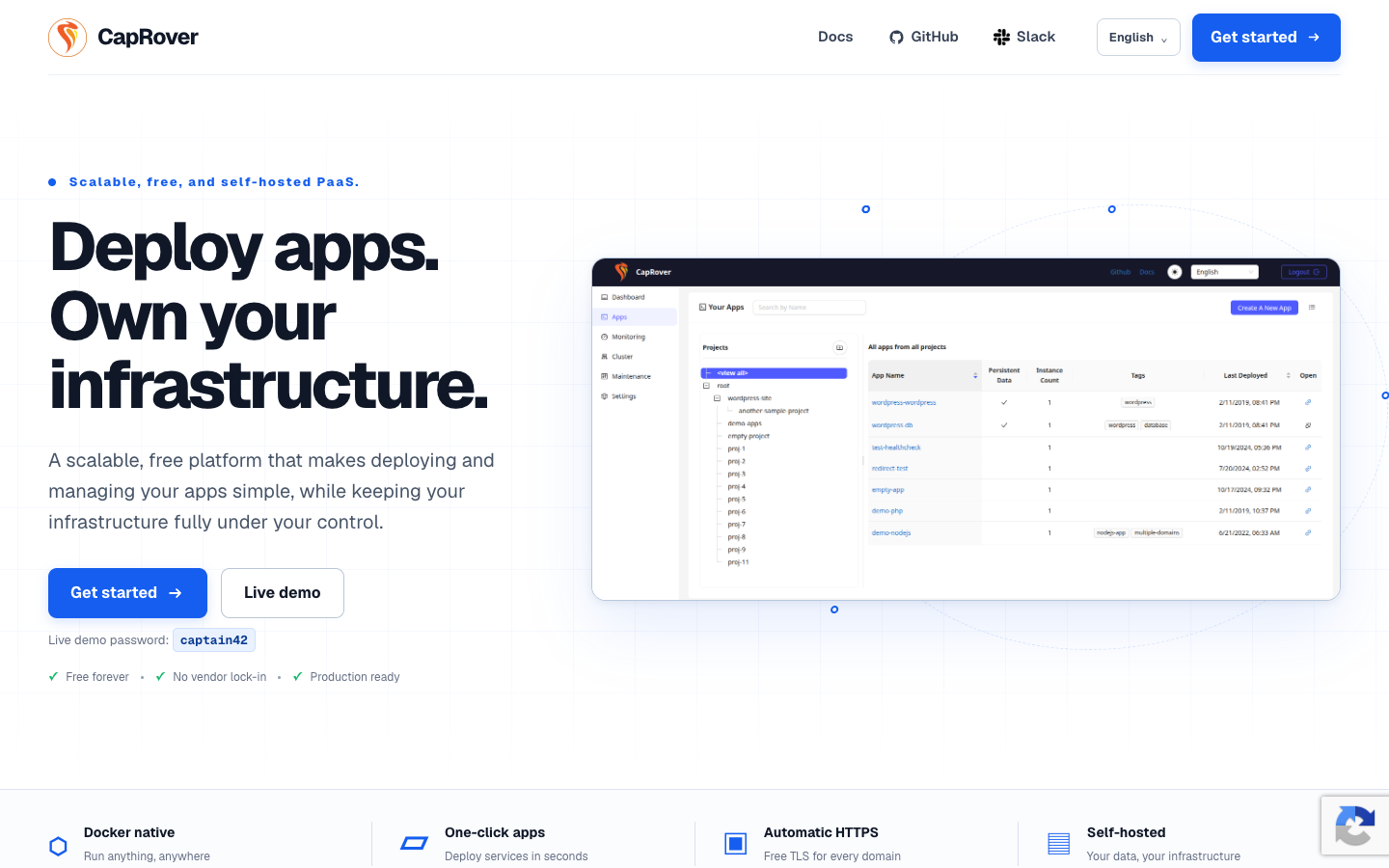
Screenshot of CapRover website

CapRover is a free, open-source PaaS that runs on your own infrastructure. It wraps Docker, nginx, Let's Encrypt and Docker Swarm in a web dashboard and CLI, so developers can deploy apps without hand-writing server setup, certificate renewals or nginx configs. It suits solo developers and small teams who want a Heroku-style workflow on servers they control.

Key benefits of CapRover include:

  • Any language: Deploy Node.js, Python, PHP, Java, Ruby, .NET or any app that runs in a container.
  • One-click apps: Launch databases, WordPress, monitoring tools and dozens of other services from a catalog.
  • Flexible deploys: Ship from the dashboard, the caprover deploy CLI, a webhook or your existing Git workflow.
  • Automatic HTTPS: Let's Encrypt certificates are issued and renewed for you, with one-click HTTP to HTTPS redirects.
  • Ready to scale: Add nodes to the Docker Swarm cluster and CapRover handles load balancing across them.

If you are leaving Heroku, CapRover gives you a similar push-to-deploy experience without per-dyno pricing, though you take on running and patching the server yourself. Compared with DigitalOcean's managed App Platform, you trade managed convenience for full control and only pay for the underlying VPS. Against Coolify, both are self-hosted and free; CapRover's draw is its Docker Swarm-based multi-node scaling and long-standing one-click app catalog, while you still need to be comfortable reaching into Docker and nginx when things go wrong. Setup is described as about 10 minutes on your own server, and a live demo is available to try first.
Read the CapRover review

Dokku is an open source platform-as-a-service powered by Docker. Push Heroku-compatible apps via Git, build them with Heroku buildpacks, and run them in isolated containers on your own server.

Free
Open-source
Self-hosted
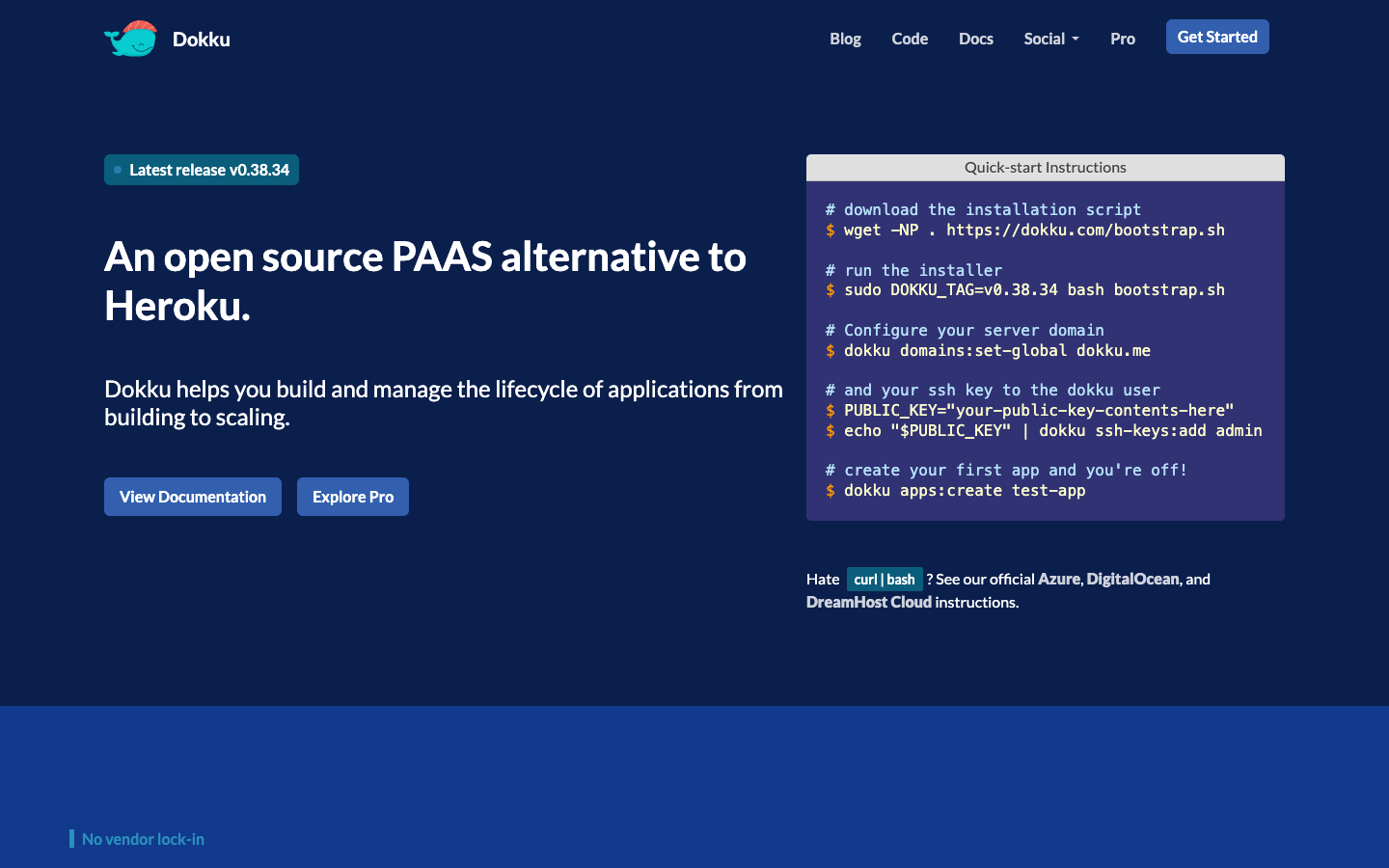
Screenshot of Dokku website

Dokku is a small, open source PaaS that gives you your own single-host version of Heroku. It is aimed at developers who want Git-push deployments without paying a hosted platform, and who are comfortable managing a Linux server. Because it is powered by Docker, it can be installed on any hardware or on inexpensive cloud providers, with official instructions for Azure, DigitalOcean and DreamHost Cloud.

Key benefits of Dokku include:

  • Heroku-compatible deploys: Push apps via Git and they build using Heroku buildpacks, then run in isolated containers.
  • No vendor lock-in: Run it on any host you choose using tools you already know, like Docker and SSH.
  • Plugin system: Dokku itself is built from plugins, and you can write your own in any language and share them.
  • Simple setup: A bootstrap script installs it, then you set a domain, add an SSH key and create your first app.
  • Full app lifecycle: Manage applications from building and deploying through to scaling from the command line.

For someone leaving Heroku, Dokku keeps the familiar buildpack and Git-push workflow while cutting hosting costs to whatever your server costs. Compared with Coolify, it is CLI-driven and minimal rather than built around a web dashboard. The trade-offs are real: it is a single-host setup, so you are responsible for the server, backups, updates and uptime. Some features are reserved for a paid Pro version, though the open source core is free to use.

Read the Dokku review

Dokploy is an open-source Platform as a Service you can self-host to deploy applications, Docker Compose stacks and databases across one or more servers, with a paid managed cloud starting at $4.50 per server per month.

Free + From $4.5/mo
Open-source
Self-hosted
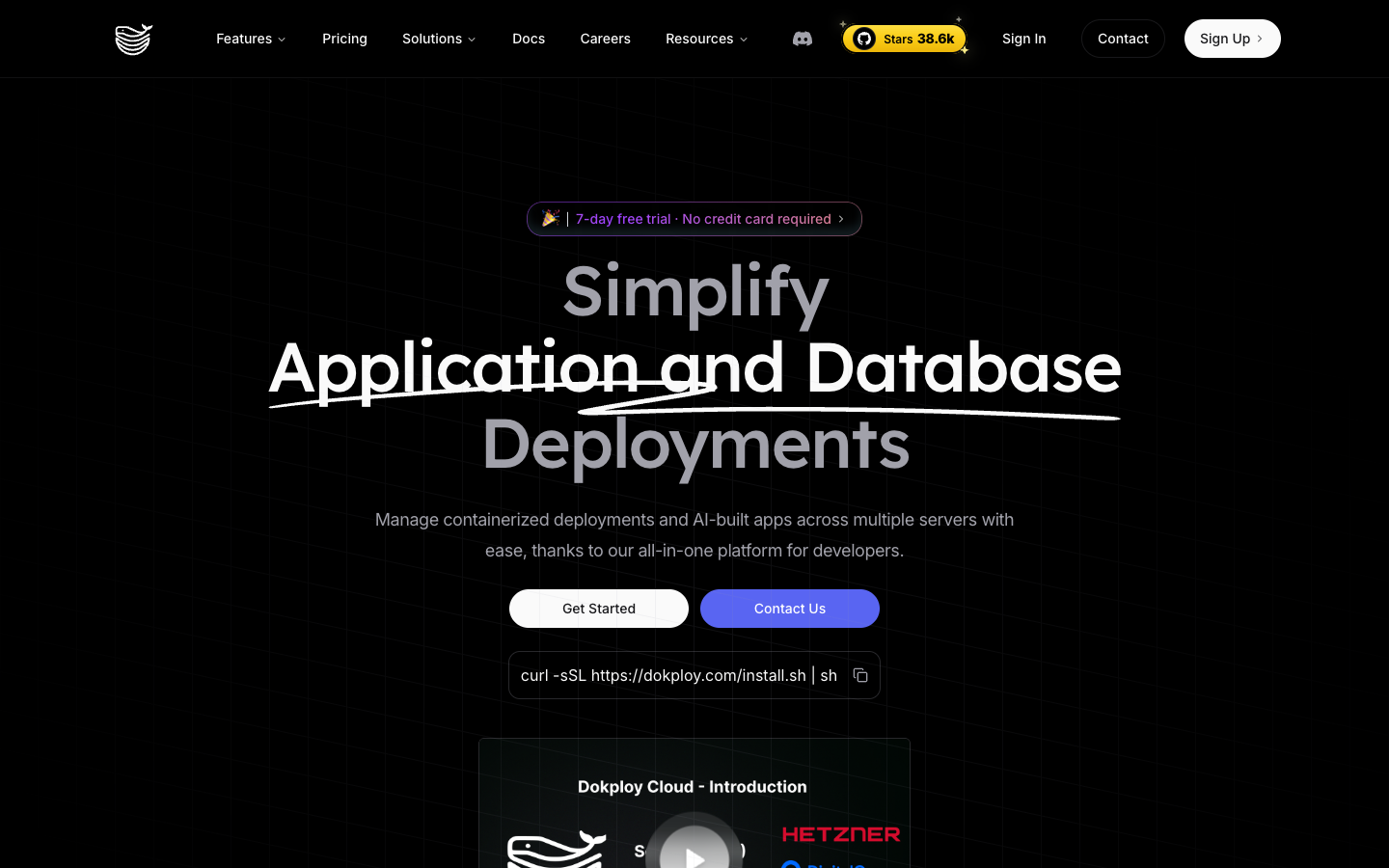
Screenshot of Dokploy website

Dokploy is an open-source, self-hostable Platform as a Service for developers and teams who want to deploy applications and databases on servers they control. It installs with a single shell script and manages containerized apps, Docker Compose stacks and databases from one dashboard, with an optional hosted cloud version for those who prefer not to run it themselves.

Key benefits of Dokploy include:

  • Flexible builds: Deploy with Nixpacks, Railpack, Heroku or Paketo Buildpacks, static builds or your own Dockerfile.
  • Native Docker Compose and Swarm: Run multi-service apps with full Compose support and scale across nodes with Docker Swarm clusters.
  • Managed databases with backups: Run PostgreSQL, MySQL, MariaDB, MongoDB, Redis and libSQL with scheduled backups to S3-compatible storage.
  • Preview deployments and rollbacks: Get a preview environment for every GitHub pull request and roll back to an earlier release when needed.
  • Multi-server and monitoring: Deploy to remote servers, watch CPU, memory, disk and network usage, and receive alerts through Slack, Discord, email and more.

If you are leaving Vercel, Netlify or Heroku, Dokploy gives you a similar git-push workflow with preview deployments while removing per-seat or usage-based platform pricing, since you run it on your own VPS. The trade-off is that you are responsible for the servers, uptime and security instead of relying on a managed edge network. Compared with Coolify, it covers similar ground; it emphasizes Docker Swarm clustering, Traefik configuration, and API and CLI access. Advanced features such as SSO, SCIM and audit logs are tied to the Enterprise plan.

Read the Dokploy review

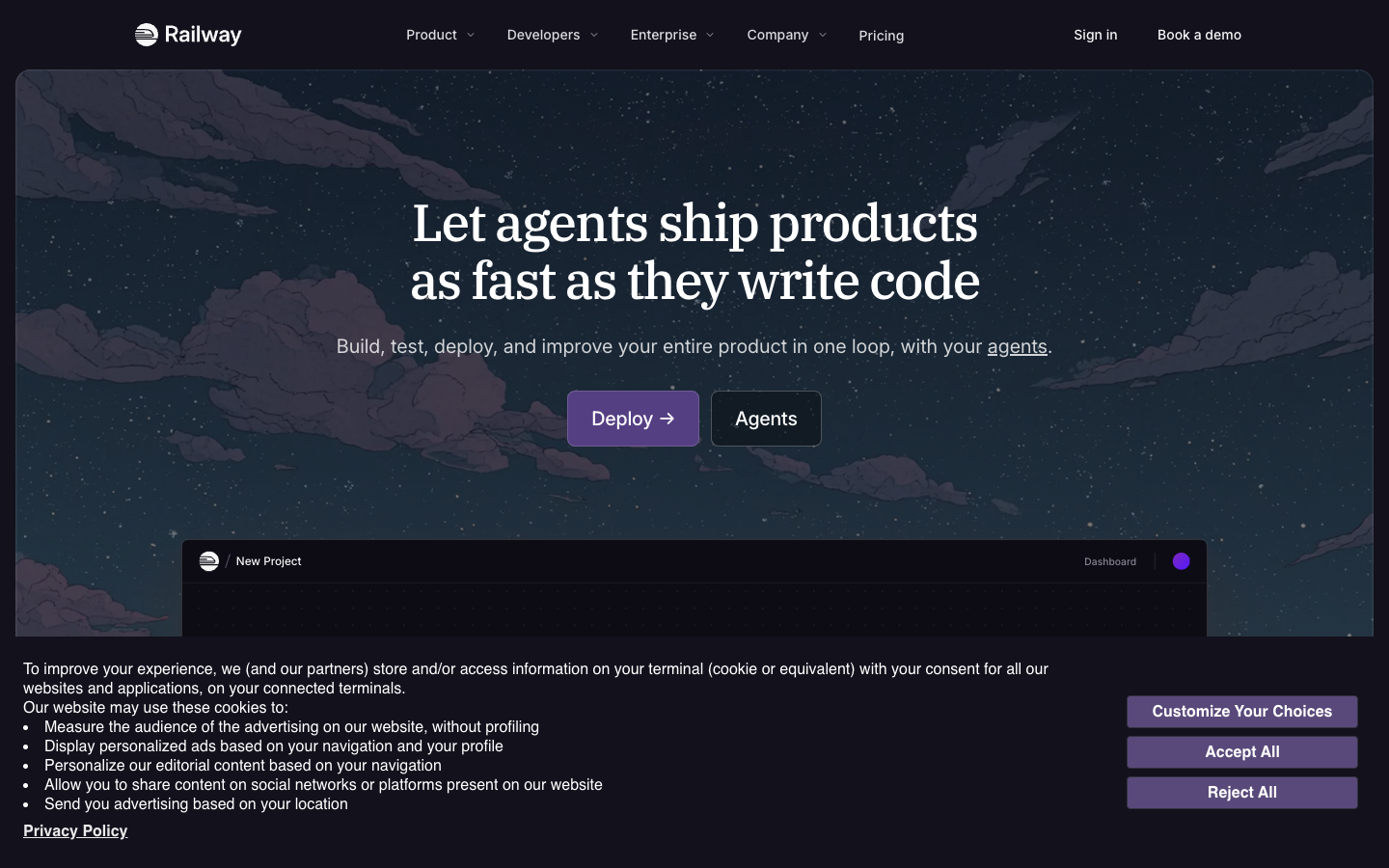
Railway is a hosted cloud platform for deploying web apps, services, databases, workers and cron jobs from a repo or Docker image, billed by the second for the CPU and RAM your code actually uses.

Free + From $5/mo
Screenshot of Railway website

Railway is a managed cloud platform where services, databases, workers and cron jobs live together on a visual project canvas. You connect a GitHub repo, a Docker image or a local repo via the CLI, and Railway detects settings, builds and deploys. It suits solo developers with side projects as well as teams running production apps.

Key benefits of Railway include:

  • Usage-based billing: CPU, memory and volumes are metered by the second, with hard spending limits to avoid surprise bills.
  • Built-in networking: Private networking, public endpoints, SSL, load balancing and DDoS protection are active from the first deploy.
  • Preview environments: Each pull request can get an isolated environment cloned from production, and any deploy can be rolled back in one click.
  • Any open-source database: Deploy databases alongside your app, with built-in database and volume backups.
  • Observability included: Logs, metrics, traces, custom dashboards and alerts to Slack, Discord or email.

For people leaving Heroku or DigitalOcean, Railway offers a similar push-to-deploy flow without choosing instance sizes, and it runs long-lived servers, TCP services and databases that Vercel and Netlify are not built around. The trade-offs: it is a proprietary hosted service, not open source or self-hostable. The free plan is limited after the 30-day trial (0.5 GB RAM and 1 vCPU per service, one project member, no custom domains), so most real projects will need the Hobby plan at a $5 monthly minimum, and usage-based costs need watching as traffic grows.

Read the Railway review

Frequently asked questions

What is the best alternative to Heroku?

The top-rated alternative to Heroku is CapRover. CapRover is an open-source platform-as-a-service that deploys and manages apps on your own servers, handling builds, routing, HTTPS and scaling through Docker Swarm. It is free and licensed under Apache 2.0. Other popular options include Dokku, Dokploy, Railway. Compare features and pricing in the table above.

How many alternatives to Heroku are there?

There are 4 alternatives to Heroku listed on YouMightNotNeed, including CapRover, Dokku, Dokploy. Each listing is hand-reviewed and includes a description, screenshot, pricing, and open-source status.

Are there free alternatives to Heroku?

Yes, there are 2 free alternatives to Heroku: CapRover, Dokku.

Are there open-source alternatives to Heroku?

Yes, there are 3 open-source alternatives to Heroku: CapRover, Dokku, Dokploy. Open-source tools can usually be self-hosted, so you keep full control of your data.

Share:

Discover the best alternatives to

View all

Put your SaaS product in front of active buyers

Reach developers, tech leaders and founders looking for open source tools to adopt.

Submit your product