

AdAdvertise with us·Reach an audience of professional tech enthusiasts
Favicon of HubSpot website

Best Popular HubSpot Alternatives

A curated collection of the 4 best alternatives to HubSpot.

4 alternatives · Updated

The best alternative to HubSpot is EspoCRM. If that doesn't suit you, we've compiled a ranked list of other HubSpot alternatives to help you find a suitable replacement. Other interesting alternatives to HubSpot are: Mautic, Odoo and Twenty.

HubSpot alternatives are mainly CRM but may also be Email or Marketing Automation. Browse these if you want a narrower list of alternatives or looking for a specific functionality of HubSpot.

HubSpot alternatives compared

#ToolPricingOpen source
1 EspoCRMFree + From $15/moYes
2 MauticFreeYes
3 OdooFree + From $24.9/moYes
4 TwentyFree + From $9/moYes

The best HubSpot alternatives, ranked

EspoCRM is an open source web CRM for managing accounts, contacts, leads and opportunities. You can download and self-host it for free or use the paid cloud service, which starts at €12.90 per user per month.
Free + From $15/mo
Open-source
Self-hosted
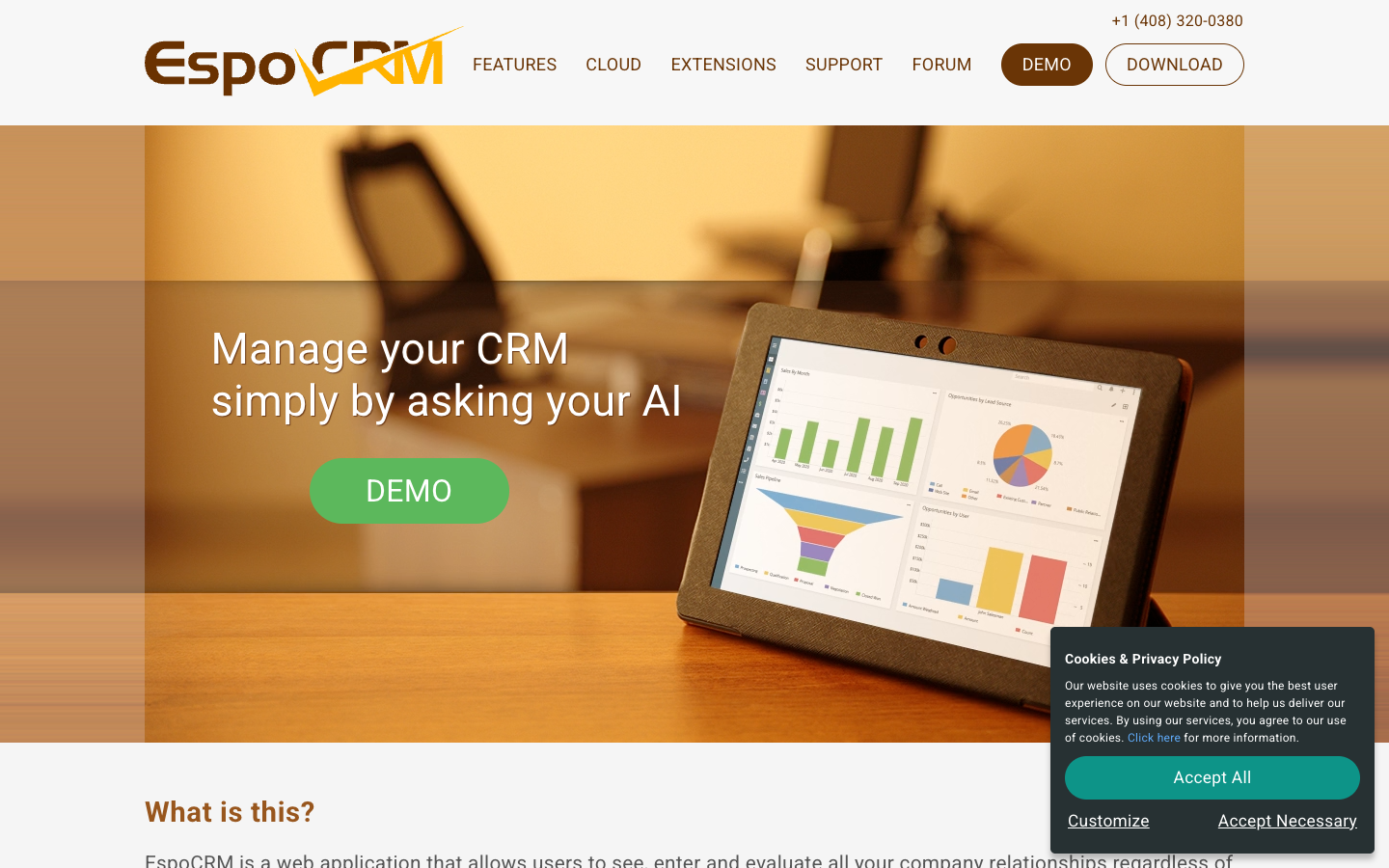
Screenshot of EspoCRM website

EspoCRM is an open source CRM web application for tracking a company's relationships with people, companies, projects and opportunities. It suits businesses that want a customizable CRM they can run on their own Windows, macOS or Linux server, with a hosted cloud option for teams that would rather not manage it themselves. The site reports use across industries such as e-commerce, manufacturing, education, real estate and healthcare.

Key benefits of EspoCRM include:

  • Core CRM records: Accounts, contacts, leads, opportunities, sales pipelines, meetings, calls and tasks are linked together for a full customer view.
  • Automation: Trigger-based and scheduled workflows, webhooks and BPMN 2.0 business process modeling handle repetitive work.
  • Sales and purchasing documents: Products, price books, quotes, sales orders, invoices, purchase orders and inventory tracking are included.
  • Reporting: List and grid reports with bar, line and pie charts can be shown on customizable dashboards.
  • Open API: An API and webhooks let you connect the CRM to other systems.

If you are moving off Salesforce, HubSpot or Zoho, EspoCRM gives you a free self-hosted CRM with no per-seat licensing and full control of your data. The trade-off is that you handle installation, updates and backups yourself. The cloud plans remove that work but carry minimum user counts: 3 users on Basic, 5 on Enterprise and 10 on Ultimate. Features like the Advanced Pack reporting and the sales modules are bundled in the cloud plans as extensions, so check what the free self-hosted install includes before you migrate.
Read the EspoCRM review

Mautic is open source marketing automation software for email campaigns, landing pages and lead management. You can self-host it for free or use managed hosting from Dropsolid, its official hosting partner.

Free
Open-source
Self-hosted
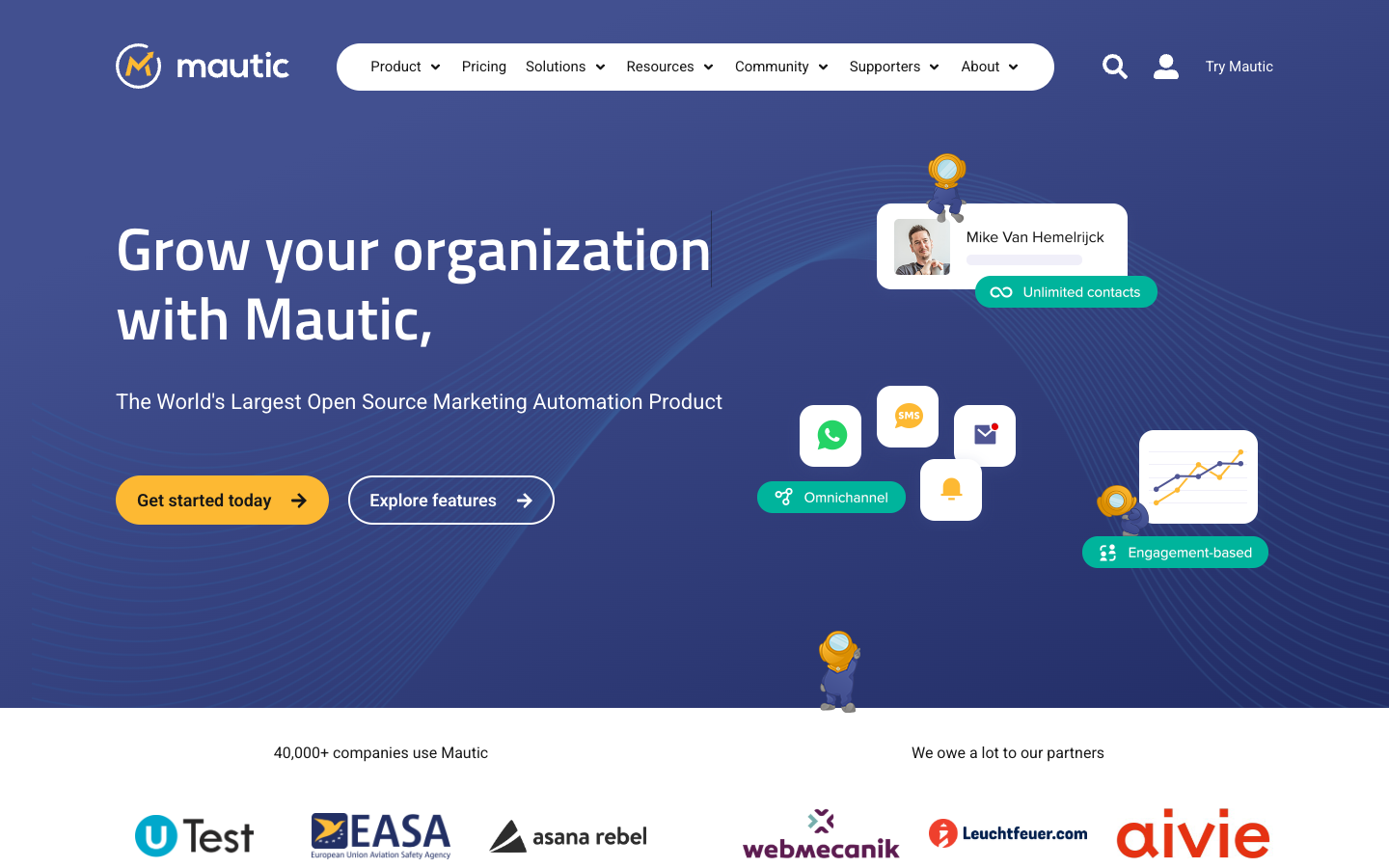
Screenshot of Mautic website

Mautic is an open source marketing automation platform maintained by a worldwide community and governed under the Open Source Collective. It covers campaign automation, email and landing page building, and contact management with lead scoring. It suits organizations that want marketing automation without vendor lock-in and with full control over where their contact data lives.

Key benefits of Mautic include:

  • Campaign builder: A click-and-drag interface lets you design multi-step automated campaigns.
  • Email and page builder: Drag-and-drop editors create emails and landing pages that work on mobile and across email clients.
  • Lead nurturing and scoring: A central view of contacts with point scoring helps prioritize leads.
  • Self-hosting and data sovereignty: Run it on your own infrastructure, with privacy features aimed at compliance with data protection laws.
  • REST API and plugins: An API and a plugin ecosystem let you connect Mautic to a CMS, CRM and other tools.

For teams leaving HubSpot or Mailchimp, Mautic removes per-contact software fees when self-hosted and keeps data in your hands. The trade-off is operational work: you install, update and secure it yourself, and you need to arrange email sending and deliverability. Community forums offer free support. If you would rather not run it, managed plans from Dropsolid start at €247.50/month billed annually (up to 50K contacts and 50K emails a month, unlimited users), which is not cheap for small senders. A 14-day free trial is available without a credit card.

Read the Mautic review

Odoo is a suite of open source business apps covering CRM, accounting, inventory, point of sale, eCommerce, HR and project management. The Community edition is free to self-host; paid cloud plans add extra apps and hosting.

Free + From $24.9/mo
Open-source
Self-hosted

Odoo is a suite of integrated business apps covering CRM, sales, accounting, invoicing, inventory, manufacturing, point of sale, eCommerce, website building, HR, marketing and project management. It is aimed at companies of any size that want one platform instead of a stack of separate tools, and it comes in two editions: Community (open source, free) and Enterprise (extra apps, infrastructure and professional services).

Key benefits of Odoo include:

  • Free self-hosting: The Community edition is open source and 100% free to run on your own servers.
  • No data lock-in: Data is stored in PostgreSQL with no proprietary format, and you get the source code via GitHub.
  • Broad app coverage: Official apps span finance, sales, supply chain, HR, marketing and services, plus 40k+ community apps.
  • Free cloud option: Odoo Online offers one app free with unlimited users.
  • Flat per-user pricing: Paid plans include all apps per user, with no usage-based pricing or long-term contracts stated.

If you are leaving Salesforce, HubSpot, Zoho or QuickBooks, Odoo can replace CRM, marketing and accounting in a single system, so data does not have to be synced between tools. The trade-off is scope: a full ERP takes real effort to configure, and implementation services, custom code maintenance and in-app credits (SMS, lead generation, bill scanning) cost extra. Some apps and features are only in the paid Enterprise edition, so check the edition comparison before committing to the free Community version. Paid cloud plans are priced in euros, starting at 24.90 € per user per month for Standard (with a first-year discount).

Read the Odoo review

Twenty is an open-source CRM that teams can self-host or use as a hosted service. It offers custom objects and fields, table, Kanban and calendar views, workflows, AI agents and REST and GraphQL APIs.

Free + From $9/mo
Open-source
Self-hosted
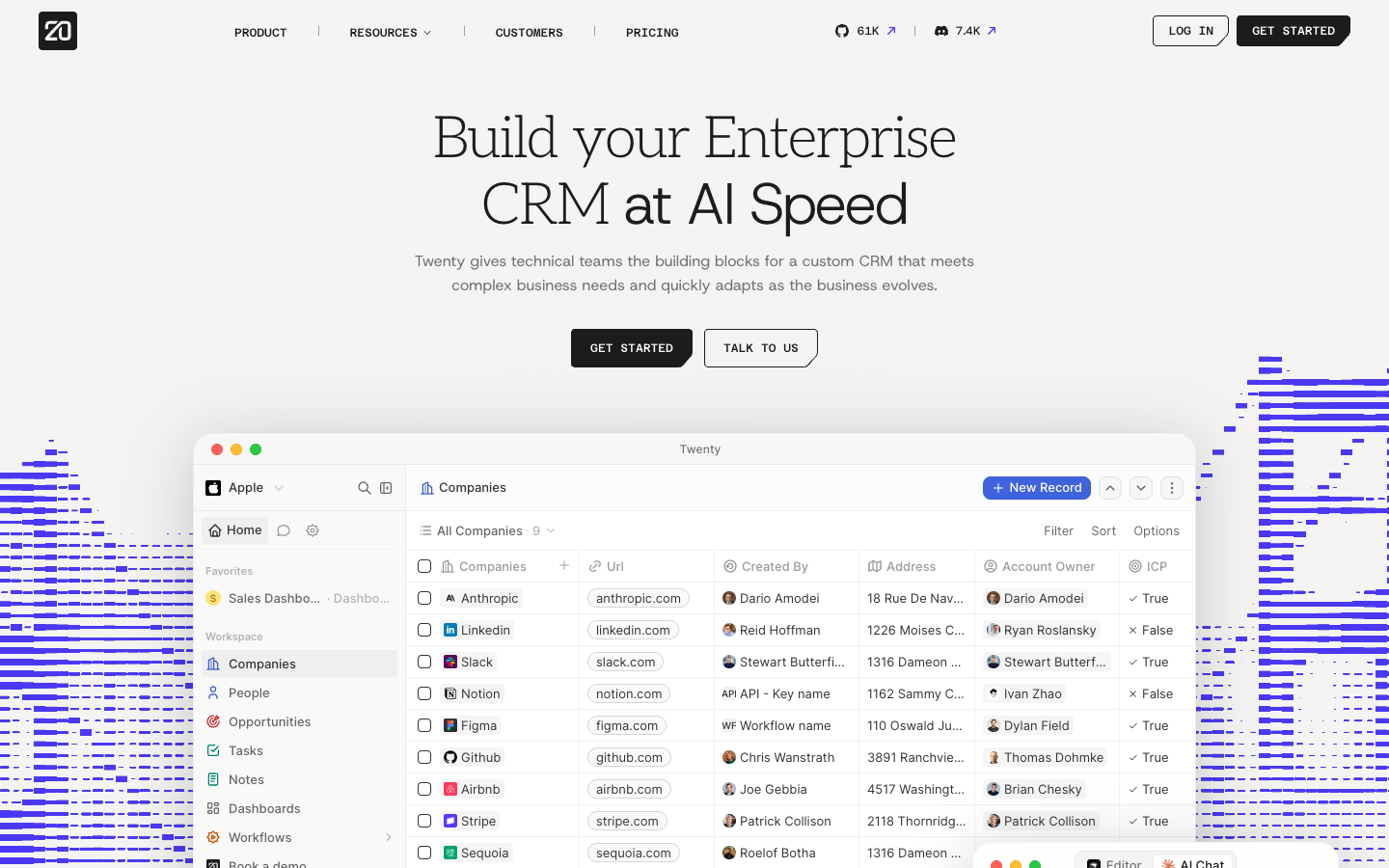
Screenshot of Twenty website

Twenty is an open-source CRM aimed at technical teams that want to shape their CRM around their own business. It provides a data model, permissions, authentication and a workflow engine. Its TypeScript SDK lets developers define custom objects, fields and views as ordinary code, with local setup and live testing. You can self-host it or use the hosted cloud plans.

Key benefits of Twenty include:

  • Custom data model: Create unlimited custom objects, fields, views and layouts, with table, Kanban and calendar view types.
  • Developer-friendly: The SDK, REST and GraphQL APIs, webhooks and an MCP server let you extend the CRM without proprietary tooling.
  • Email and calendar sync: Hosted plans connect Google and Microsoft email and calendar accounts so messages and meetings are logged automatically.
  • Workflows and AI agents: Automate repetitive tasks with workflows, AI agents and a built-in AI chat.
  • Self-hosting option: Run your own instance to avoid vendor lock-in. One customer, AC&T, reports cutting CRM costs by more than 90% this way.

For teams leaving Salesforce or HubSpot, Twenty removes per-feature add-on pricing and proprietary languages. It also gives you full access to the code. Hosted Pro starts at $9 per user per month, and features like the API, webhooks and unlimited custom objects are included rather than sold separately.

The trade-off is maturity and ecosystem. Twenty is built for teams with developers who will customize it, and it has a much smaller app marketplace. On the hosted plans, advanced items like SSO, custom roles and audit logs require the $39 Organization plan. Self-hosting also means running and maintaining the infrastructure yourself.

Read the Twenty review

Frequently asked questions

What is the best alternative to HubSpot?

The top-rated alternative to HubSpot is EspoCRM. EspoCRM is an open source web CRM for managing accounts, contacts, leads and opportunities. You can download and self-host it for free or use the paid cloud service, which starts at €12.90 per user per month. Other popular options include Mautic, Odoo, Twenty. Compare features and pricing in the table above.

How many alternatives to HubSpot are there?

There are 4 alternatives to HubSpot listed on YouMightNotNeed, including EspoCRM, Mautic, Odoo. Each listing is hand-reviewed and includes a description, screenshot, pricing, and open-source status.

Are there free alternatives to HubSpot?

Yes, there is 1 free alternative to HubSpot: Mautic.

Are there open-source alternatives to HubSpot?

Yes, there are 4 open-source alternatives to HubSpot: EspoCRM, Mautic, Odoo, Twenty. Open-source tools can usually be self-hosted, so you keep full control of your data.

Share:

Discover the best alternatives to

View all

Put your SaaS product in front of active buyers

Reach developers, tech leaders and founders looking for open source tools to adopt.

Submit your product