
AdAdvertise with us·Reach an audience of professional tech enthusiasts
Favicon of ChatGPT website

Open Source ChatGPT Alternatives

A curated collection of the 4 best open source alternatives to ChatGPT.

4 open source alternatives · Updated

The best open source alternative to ChatGPT is Jan. If that doesn't suit you, we've compiled a ranked list of other open source ChatGPT alternatives to help you find a suitable replacement. Other interesting open source alternatives to ChatGPT are: LibreChat, Ollama and Open WebUI.

ChatGPT alternatives are mainly Artificial Intelligence but may also be Desktop Apps. Browse these if you want a narrower list of alternatives or looking for a specific functionality of ChatGPT.

Open Source ChatGPT alternatives compared

#ToolPricingOpen source
1 JanFreeYes
2 LibreChatFreeYes
3 OllamaFree + From $20/moYes
4 Open WebUIFreeYes

The best open source ChatGPT alternatives, ranked

#1
Favicon of Jan website

Jan

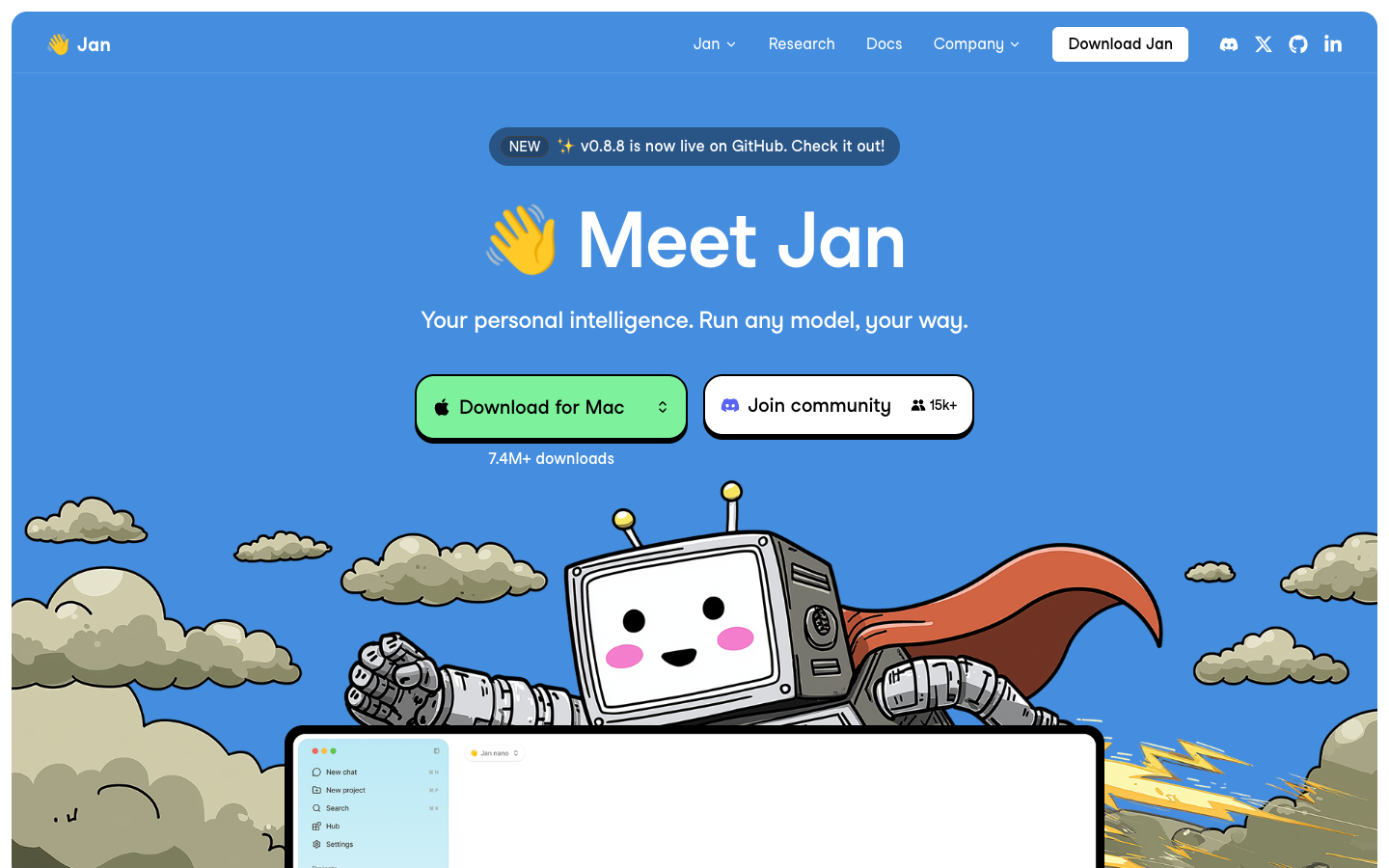
Jan is an open-source alternative to ChatGPT that lets you run open AI models such as Llama, Mistral, Qwen and DeepSeek locally, or plug in cloud models like GPT, Claude and Gemini.
Free
Open-source
Screenshot of Jan website

Jan is a free, open-source desktop app for chatting with AI models. It is built by Menlo Research for people who want a ChatGPT-style assistant they control: you can run open models on your own machine or connect to online models from providers you already use. The project is developed in public on GitHub, where it has over 45,000 stars.

Key benefits of Jan include:

  • Local models: Run open models such as Llama, Mistral, Qwen, DeepSeek, Gemma and Kimi on your own computer.
  • Cloud model support: Plug in online models including OpenAI's ChatGPT, Anthropic's Claude and Google's Gemini from the same app.
  • Open source: The code is public on GitHub, so you can inspect it, contribute or build on it.
  • Free to download: The desktop app is free, with more than 7 million downloads reported.
  • Active community: Discord, GitHub and a HuggingFace presence with 123 published models.

If you are leaving ChatGPT, Gemini or Copilot, Jan gives you one interface that can run models offline on your own hardware, which keeps conversations on your machine, while still letting you reach hosted models when you need them. The trade-offs: local models depend on your computer's resources and may be slower or less capable than the largest hosted models, and using cloud models still means sending data to, and paying, those providers. Some features, like persistent memory across chats, are listed as coming soon rather than available today.
Read the Jan review

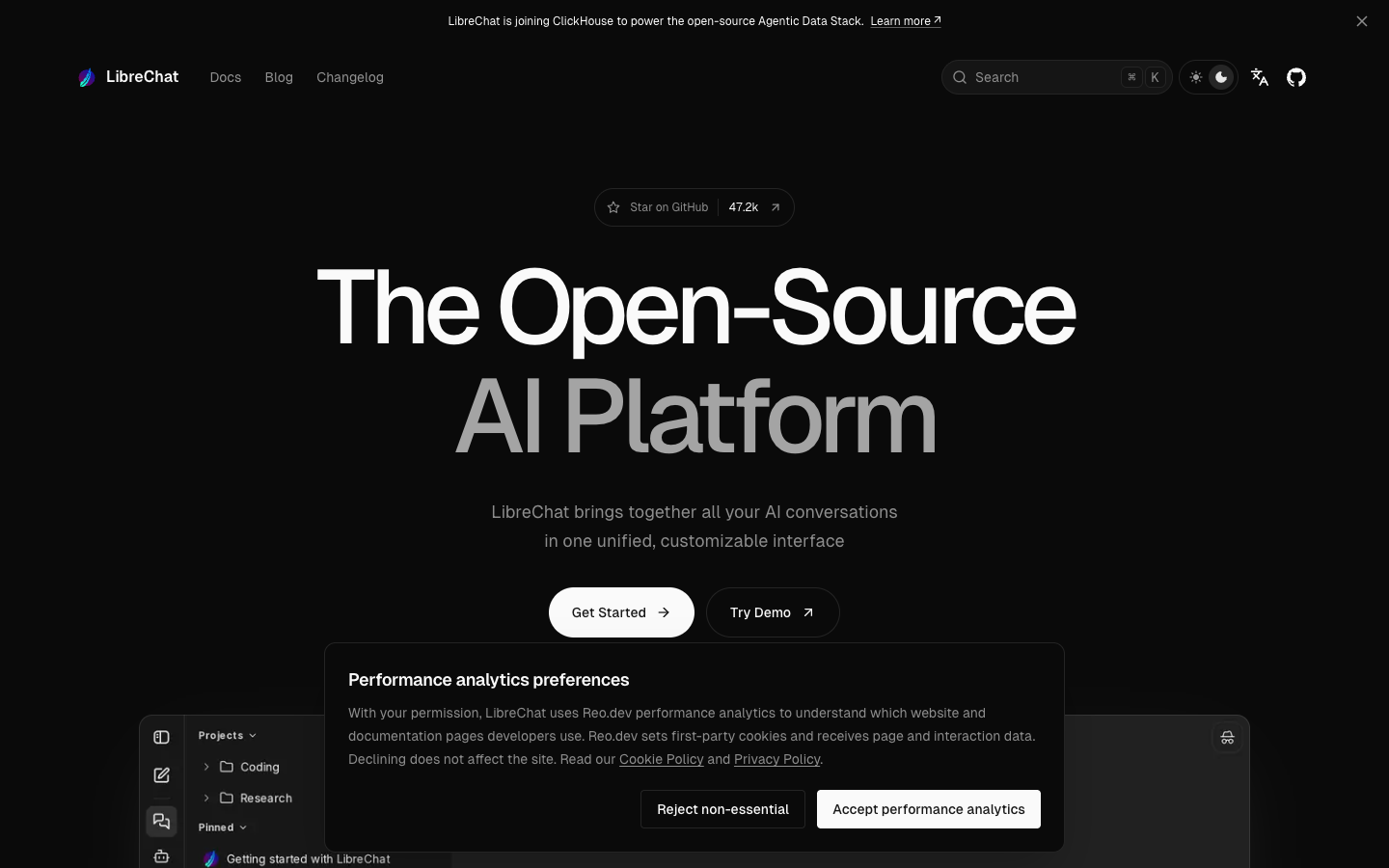
LibreChat is an open-source AI chat platform you can self-host. It connects OpenAI, Anthropic, Google, Ollama and many other providers in one interface, with agents, artifacts, MCP tools, memory and enterprise SSO.

Free
Open-source
Self-hosted
Screenshot of LibreChat website

LibreChat is an open-source AI platform that brings conversations with many AI providers and local models into one customizable interface. It suits individuals, developers and organizations who want a ChatGPT-style workspace they can run on their own infrastructure, with a large community behind it (47.2k GitHub stars and 425 contributors at the time of writing).

Key benefits of LibreChat include:

  • Many models in one place: Connect OpenAI, Anthropic, Google, Azure OpenAI, AWS Bedrock, Mistral, DeepSeek, OpenRouter, Ollama, vLLM and more from a single workspace.
  • Agents and tools: Build agents with your files, reusable skills and subagents, and connect external services through Model Context Protocol (MCP).
  • Artifacts and code execution: Turn conversations into interactive apps, diagrams and documents, and run code in an isolated interpreter.
  • Memory and search: Keep persistent context across chats, organize work into projects, search past messages and give models live web search.
  • Enterprise authentication: Supports SSO with OAuth, SAML and LDAP, plus two-factor authentication.

If you are leaving ChatGPT, Gemini or Copilot, LibreChat lets you keep a familiar chat experience while choosing which models to use, including local ones, and keeping conversation data on your own servers. The trade-off is that you have to install and maintain it yourself (Docker-based local and remote install guides are available), and you still need API keys or a local model runtime, which carry their own costs or hardware requirements.

Read the LibreChat review

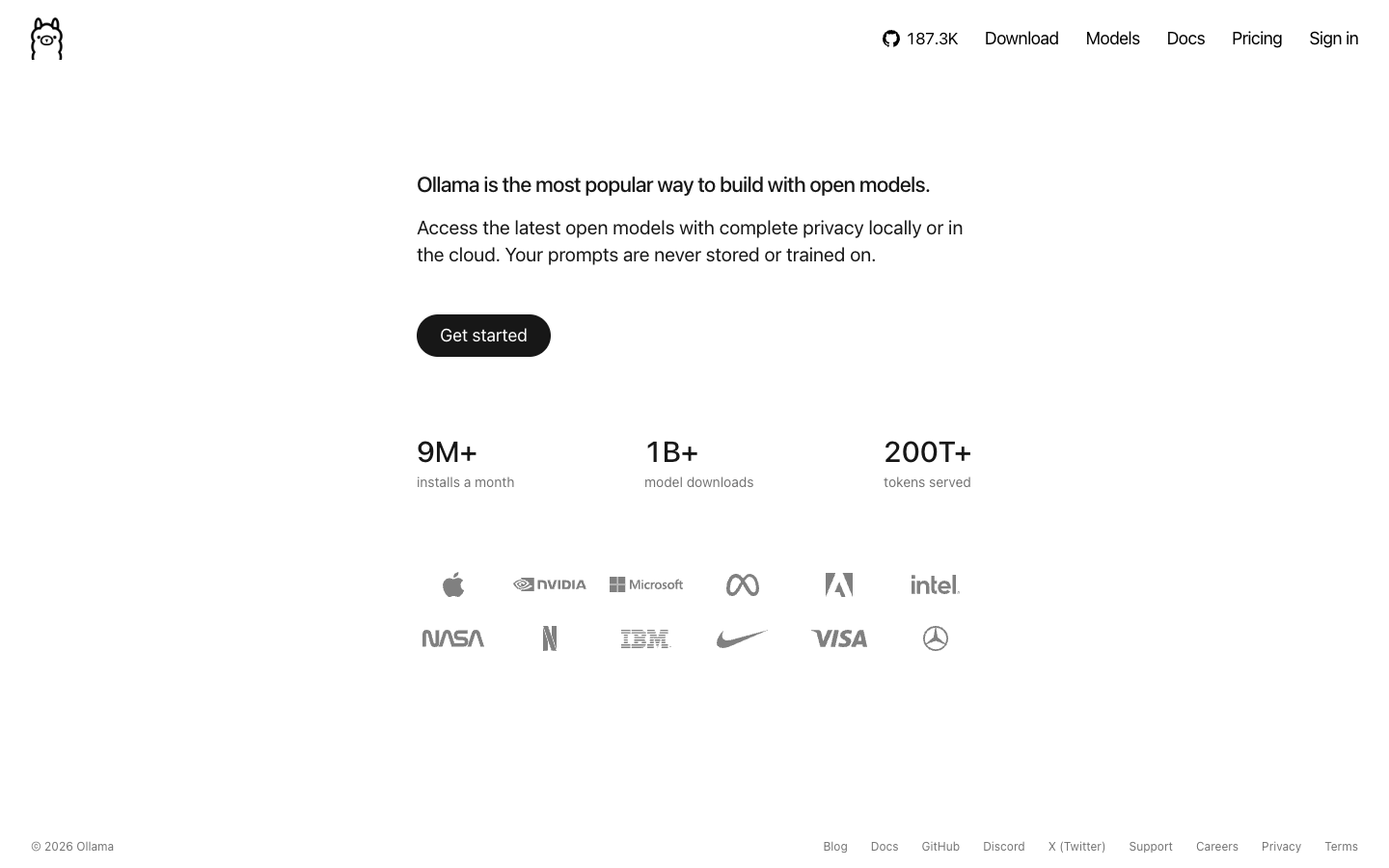
Ollama is an open-source tool for running open AI models on your own computer, with an optional paid cloud for larger models. It works on macOS, Windows and Linux, and local use is free and unlimited.

Free + From $20/mo
Open-source
Self-hosted
Screenshot of Ollama website

Ollama is an open-source app for downloading and running open AI models on your own hardware. It runs on macOS, Windows and Linux and suits developers and privacy-minded users who want a local alternative to hosted chatbots, with an optional cloud service when a model is too large to run locally.

Key benefits of Ollama include:

  • Local and unlimited: Running models on your own hardware is free and has no usage caps.
  • Privacy: Ollama says prompts are never stored or trained on, and local models keep data on your machine.
  • Wide model selection: Cloud models include options such as gpt-oss, DeepSeek, Kimi, GLM, Gemma and Mistral Large, priced per million tokens.
  • Tool calling: Cloud models trained for tools are tested for tool calling and agent workflows before release.
  • Flexible cloud billing: Pay as you go per token with no subscription, or choose Pro ($20/month) or Max ($100/month) plans that include usage credits.

For someone leaving ChatGPT, Ollama gives control over which model runs and where your data goes, and local use costs nothing beyond your hardware. The trade-off is that local performance depends on your machine, and the largest models need either powerful hardware or Ollama's paid cloud. It is primarily a model runner rather than a polished chat product, so expect some setup and possibly a separate interface for a ChatGPT-like experience.

Read the Ollama review

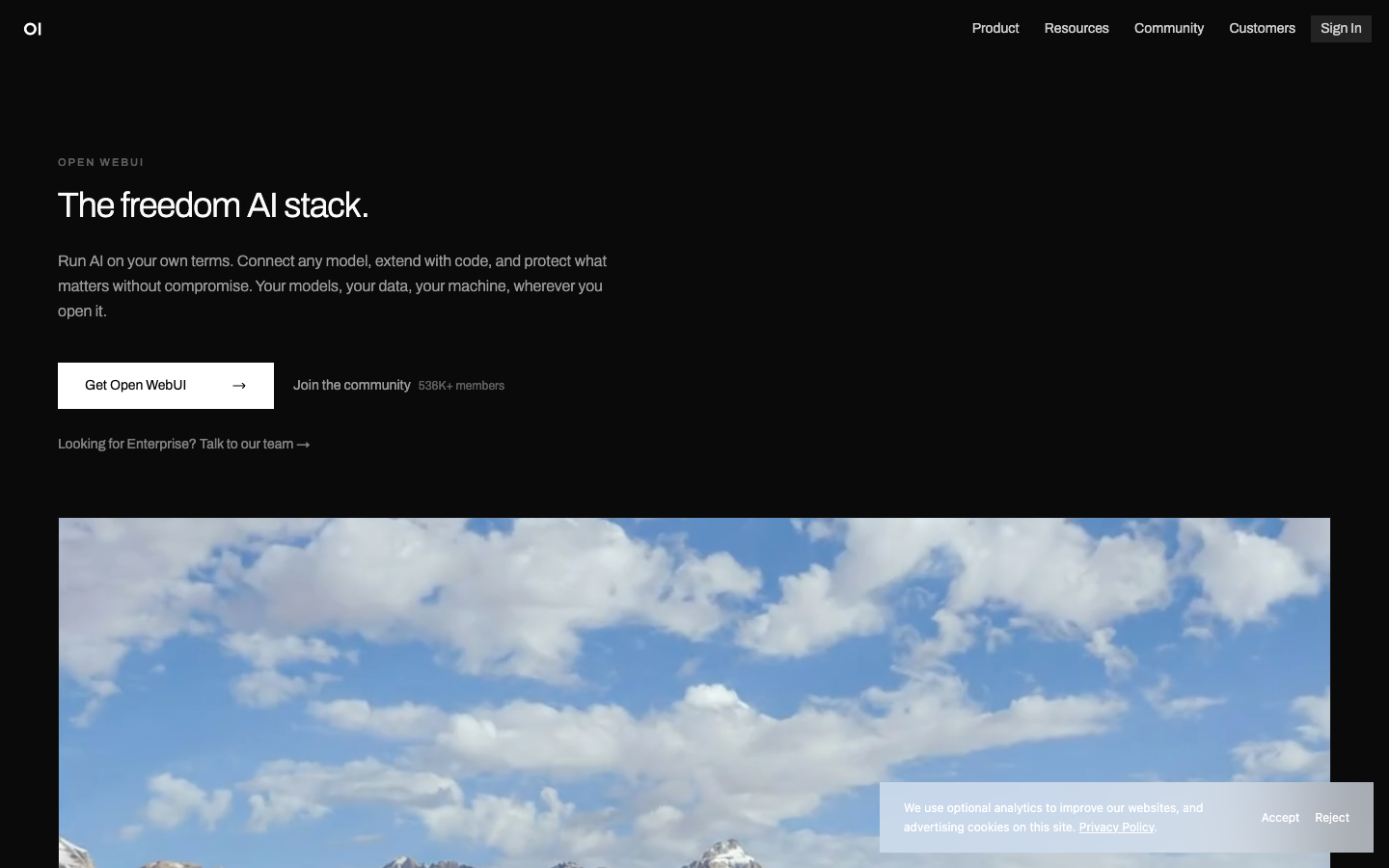
Open WebUI is an open-source, self-hosted interface for running AI chat on your own hardware. It connects to Ollama, OpenAI, Anthropic or any compatible API, and can be extended with Python tools and functions.

Free
Open-source
Self-hosted
Screenshot of Open WebUI website

Open WebUI is an open-source, self-hosted AI platform that gives you a chat workspace on your own machine, server or cloud. It is aimed at individuals who want to run local models and at organizations that need to keep AI usage and data under their own control, including on-premises or air-gapped setups.

Key benefits of Open WebUI include:

  • Any model: Connect to Ollama, OpenAI, Anthropic or any compatible API, running locally, in the cloud, or both.
  • Quick install: Install with pip install open-webui or Docker, with no account required.
  • Extensible with Python: Add tools, functions and pipelines for RAG, search and code execution.
  • Community library: Browse and install prompts, models, tools and functions shared by community members.
  • Organization features: SSO, RBAC, audit logs and data residency options are available for teams in regulated industries.

For someone moving away from ChatGPT, Gemini or Copilot, Open WebUI offers a familiar chat interface where conversations and data stay on infrastructure you choose, and you are not tied to a single model vendor. The trade-off is that you run it yourself: you need to install and maintain it, and either provide hardware capable of running local models or bring your own API keys (and pay those providers) for cloud models. Response quality depends on which model you connect, not on Open WebUI itself.

Read the Open WebUI review

Share:

Discover the best open source alternatives to

View all

Put your SaaS product in front of active buyers

Reach developers, tech leaders and founders looking for open source tools to adopt.

Submit your product